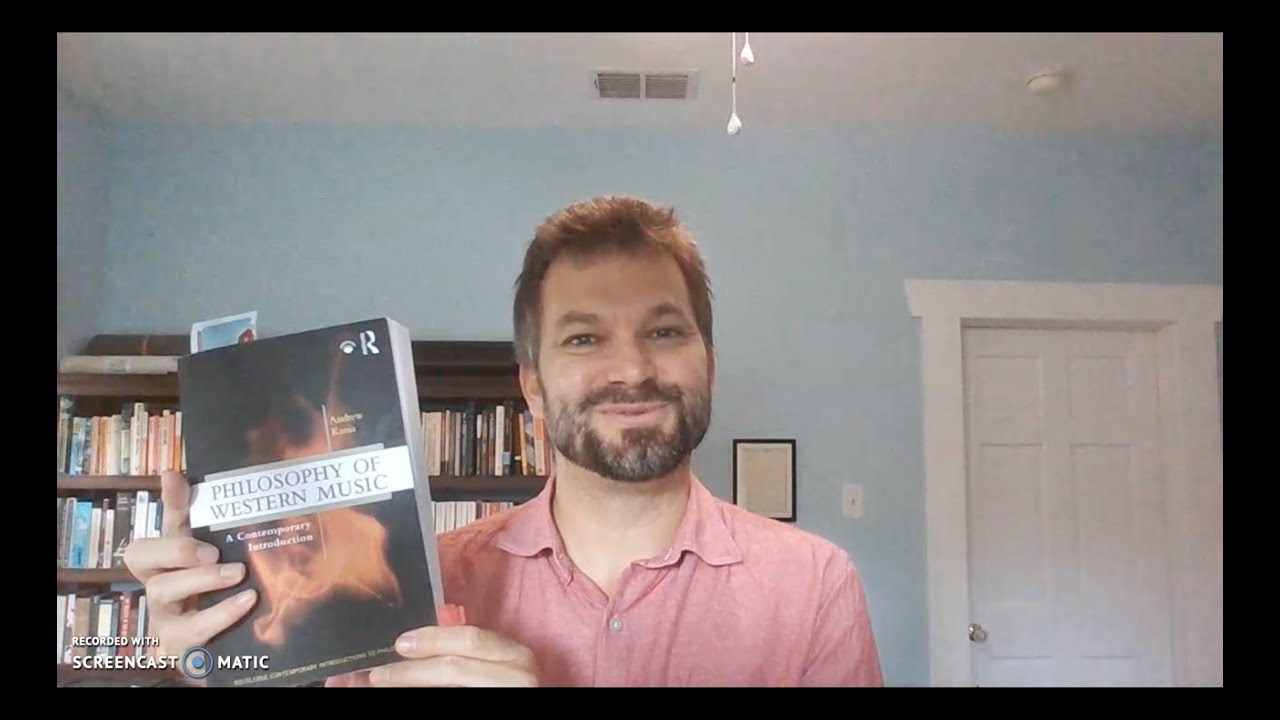
Ep. 78: Authenticity in Classical Music | A Discussion with Andrew Kania
Автор: Philosophers Discussing Art
Загружено: 2025-02-20
Просмотров: 242
Описание:
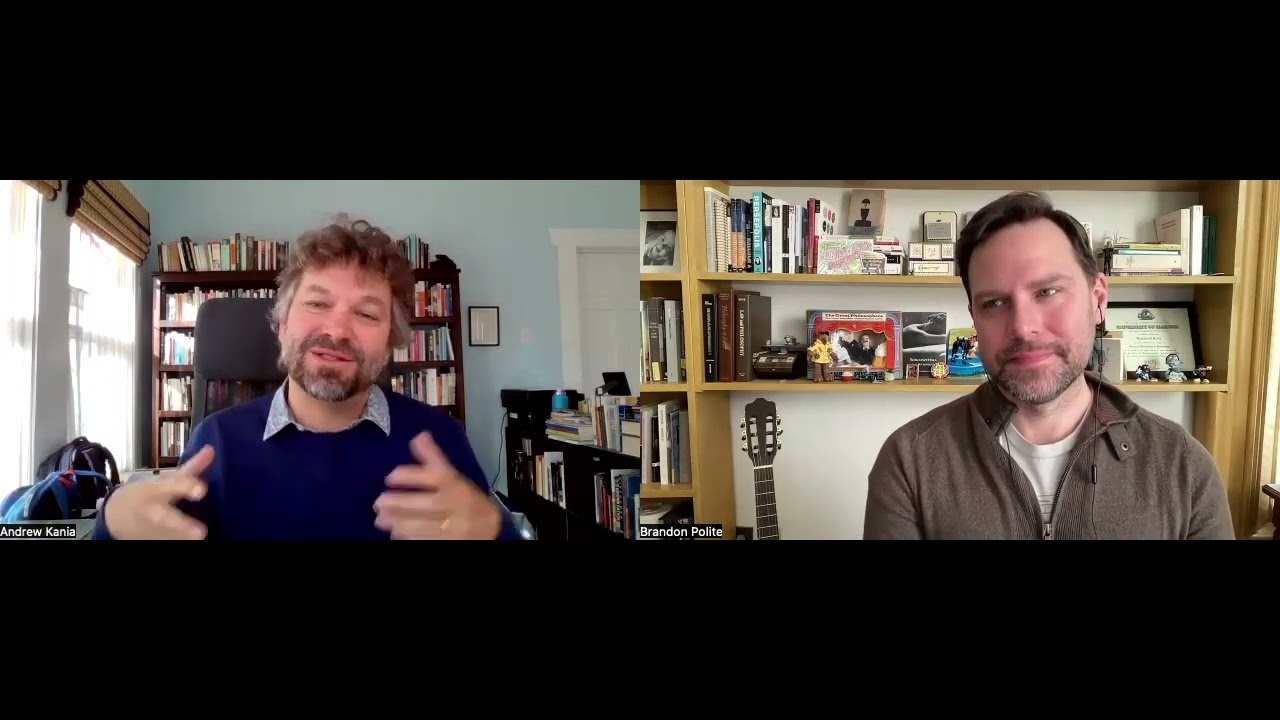
In this episode, Brandon Polite (Knox College | he/him) talks with Andrew Kania (Trinity University | he/him) about the authenticity in the classical music tradition.
We begin by discussing the broader question of why authenticity matters outside of philosophical inquiry. Kania argues that the debate originates in the classical music world itself, where musicians and audiences care deeply about how works are performed. The rise of the historically informed performance (HIP) movement in the 20th century spurred discussions among musicians, musicologists, and philosophers about what it means to authentically realize a musical work.
We then turn to discuss the dominant philosophical view of authenticity in classical music, "score-compliance authenticity": the idea that performing a work authentically requires adhering to the score's notational instructions. This position has been challenged recently by Julian Dodd (as he and I discussed in Ep. 47: • Ep. 47: Classical Music & Authenticity | A... ), who argues that the ultimate goal of a performance should be "interpretive authenticity": i.e., to evince understanding of a work’s meaning. Dodd suggests that this might require deviations from the score, such as altering instrumentation, to better communicate the work’s underlying structure or intent.
Kania disagrees with Dodd's view, arguing that fidelity to the score and interpretive authenticity should not be in conflict but rather understood as a unified norm. He contends that the meaning of a work includes both its underlying structure and its surface details, such as instrumentation and timbre. Altering any of these elements may clarify one aspect of a work's meaning but does so at the cost of misrepresenting another.
This leads to a discussion of historically informed performance, where Kania aligns himself with the HIP movement. He suggests that playing works on period-accurate instruments is crucial for authenticity, especially in ensemble music where timbral balance is essential. While acknowledging that some aspects of musical meaning can be conveyed even in inauthentic performances, Kania emphasizes that something is inevitably lost when historical performance practices are ignored.
From here we explore whether authenticity is an all-or-nothing concept or exists on a continuum. Kania leans toward a continuum view, where performances can be more or less authentic depending on how closely they adhere to the score and historical conventions. He distinguishes between intentional deviations (which compromise authenticity) and accidental mistakes (which often do not, provided the performer intends to follow the score).
We next discuss the relationship between the score and the musical work. Addressing Nelson Goodman’s view that any deviation from the score results in a performance not being of the intended work, Kania offers a more flexible stance. He sees the score as a historical artifact that conveys the composer’s intentions within specific conventions, and he acknowledges that different time periods and composers allow for varying degrees of interpretive flexibility.
We then consider the parallel between classical music and theater that Julian Dodd brough up in my interview with him. Dodd argued that if cutting or modifying Shakespearean plays is common and uncontroversial, similar flexibility should be acceptable in classical music. Kania resists this analogy, maintaining that just as historically authentic Shakespeare performances can reveal new insights into a play, the same holds for classical music.
We conclude with a discussion of performers' intentions. Kania emphasizes that reasonable intention to comply with the score is necessary for authenticity. He contrasts professional musicians with student ensembles, noting that while young musicians may aim to perform a work, their technical limitations might prevent them from realizing it fully.
References:
Andrew Kania, "Musical Meaning and Authentic Work-Performance: Three Dilemmas for the Interpretive Authenticist" (Journal of Aesthetics and Art Criticism, forthcoming)
David Davies, Philosophy of the Performing Arts (Wiley-Blackwell 2011)
Stephen Davies, Musical Works and Performances (Oxford University Press 2001)
Julian Dodd, Being True to Works of Music (Oxford University Press 2020)
Nelson Goodman, Languages of Art, 2nd ed (Hackett 1976)
Chapters:
0:00 Introductions
1:30 Why Care About Authenticity?
3:54 Authenticity & Complying with the Score
14:50 Authenticity & Historically Accurate Instruments
21:20 Authenticity: All or Nothing?
26:06 The Relationship Between Scores & Works
32:50 How Much Can Performers Deviate from Scores?
39:17 The Importance of Intentions to Authenticity
43:20 On the Nature of Those Intentions
49:25 Theatrical v. Classical Music Performance Conventions
58:53 Conclusion
SUBSCRIBE TO THIS CHANNEL
https://www.youtube.com/c/Philosopher...
Subtitles & audio edited by Athko Ehrnstein
Повторяем попытку...
Доступные форматы для скачивания:
Скачать видео
-
Информация по загрузке: