"The Unveiling of Truth and Ultimate Accountability"
Автор: Nazra Quran with tech NaziaMumtaz
Загружено: 2024-11-26
Просмотров: 35
Описание:
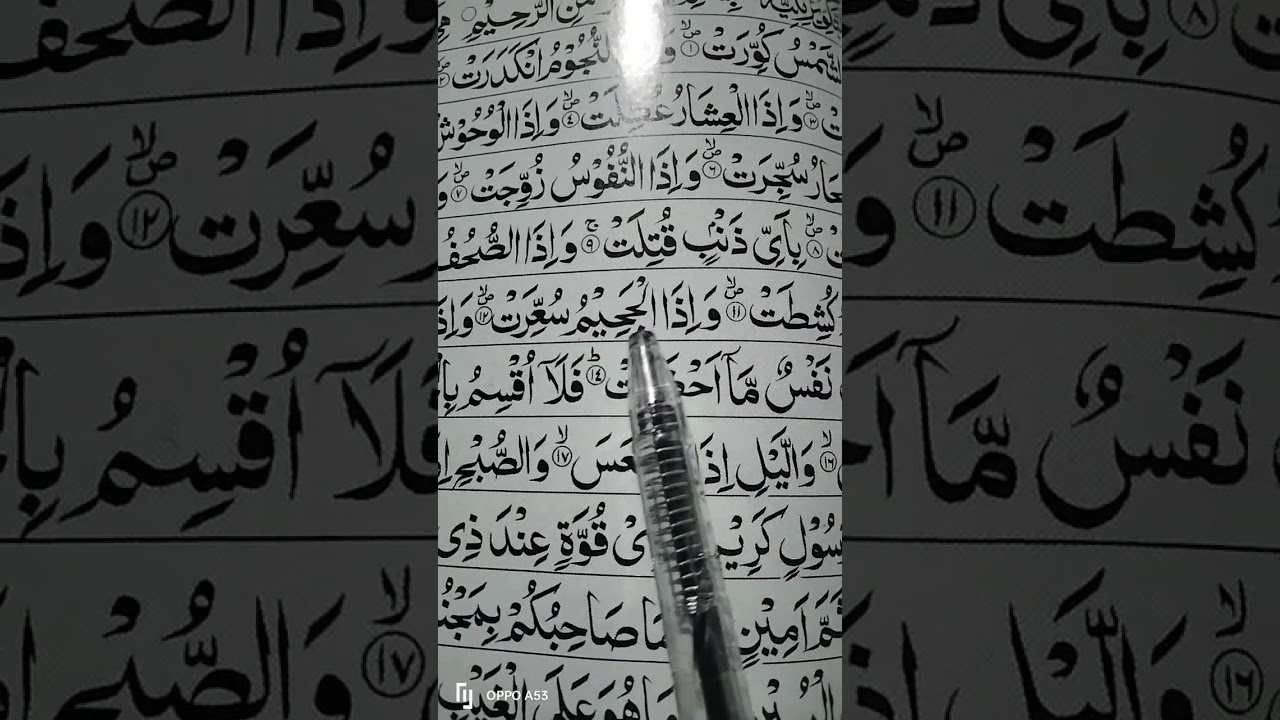
Surah At-Takweer (81:11–14) paints a vivid picture of the events and realities of the Day of Judgment. These verses highlight the exposure of hidden truths and the accountability every soul will face for its actions:
Verse 11: "When the sky is stripped away,"
This symbolizes the unraveling of the heavens, a dramatic cosmic event signifying the end of the world as we know it.
Verse 12: "And when Hellfire is set ablaze,"
Hell will be fully ignited and ready to receive those who denied and disobeyed.
Verse 13: "And when Paradise is brought near,"
Paradise will be drawn closer for the righteous, a reward for their belief and good deeds.
Verse 14: "A soul will know what it has brought forth."
Every individual will clearly see and understand the consequences of their actions—whether good or bad—and will be held accountable.
These verses emphasize the themes of ultimate justice and personal responsibility, reminding humanity of the inevitable reality of the Hereafter. They call for reflection and preparation through faith and righteous deeds.
The topics covered in Surah At-Takweer (81:11–14) include:
1. Cosmic Events of the Day of Judgment
The unraveling of the heavens (Verse 11).
The ignition of Hellfire (Verse 12).
The nearness of Paradise (Verse 13).
2. Accountability and Reckoning
Every soul will be confronted with the results of its actions, emphasizing personal responsibility (Verse 14).
3. Contrast Between Reward and Punishment
The juxtaposition of Hellfire and Paradise highlights the stark outcomes of human deeds.
4. Reminder of the Hereafter
The verses urge reflection on the inevitability of the Day of Judgment and the importance of preparing for it.
These topics aim to instill awareness of the Hereafter and encourage moral and spiritual consciousness.
Certainly! Here are additional dimensions and reflections on the topics in Surah At-Takweer (81:11–14):
1. The Fragility of the Universe
The tearing apart of the sky (Verse 11) serves as a reminder of the transient nature of the world and the power of Allah. It illustrates how the established cosmic order will cease to exist, emphasizing that everything we perceive as permanent is under divine control.
2. The Reality of Hellfire
The mention of Hellfire being set ablaze (Verse 12) underscores its terrifying nature and inevitability for those who reject divine guidance. It serves as a deterrent against sinful behavior.
3. The Beauty and Proximity of Paradise
Paradise being brought near (Verse 13) signifies its accessibility for the righteous, portraying it as a tangible and attainable reward for believers. This reinforces hope and motivation for virtuous living.
4. The Certainty of Divine Justice
The statement that every soul will know what it has brought forth (Verse 14) encapsulates the theme of absolute justice. It highlights the transparency of judgment on the Day of Resurrection, leaving no room for denial or excuse.
5. Themes of Reflection and Accountability
These verses prompt self-examination, urging individuals to reflect on their deeds and prioritize eternal success over temporary worldly gains.
6. The Dual Nature of the Afterlife
The parallel depiction of Paradise and Hell serves as a dual reminder of hope and fear, balanced to guide human behavior.
7. Faith in the Unseen
These descriptions call for belief in the unseen realities of the Hereafter, a cornerstone of Islamic faith, encouraging trust in divine revelation.
8. Urgency of Preparation
The vivid imagery and the inevitability of accountability stress the urgency of preparing for the Hereafter through faith, repentance, and righteous actions.
This multi-faceted message from these verses serves as both a warning and a source of hope, guiding humanity toward moral and spiritual awakening.
Повторяем попытку...
Доступные форматы для скачивания:
Скачать видео
-
Информация по загрузке:





![Куран Сура Аль-Бакара[28-61] Ханиф Ибрахим Аш-Шишани](https://image.4k-video.ru/id-video/_63Ma3SRckg)