History of Kailasa Temple & Ellora Rock Cut Caves of India
Автор: Creation & the Universe
Загружено: 2023-07-04
Просмотров: 2539
Описание:
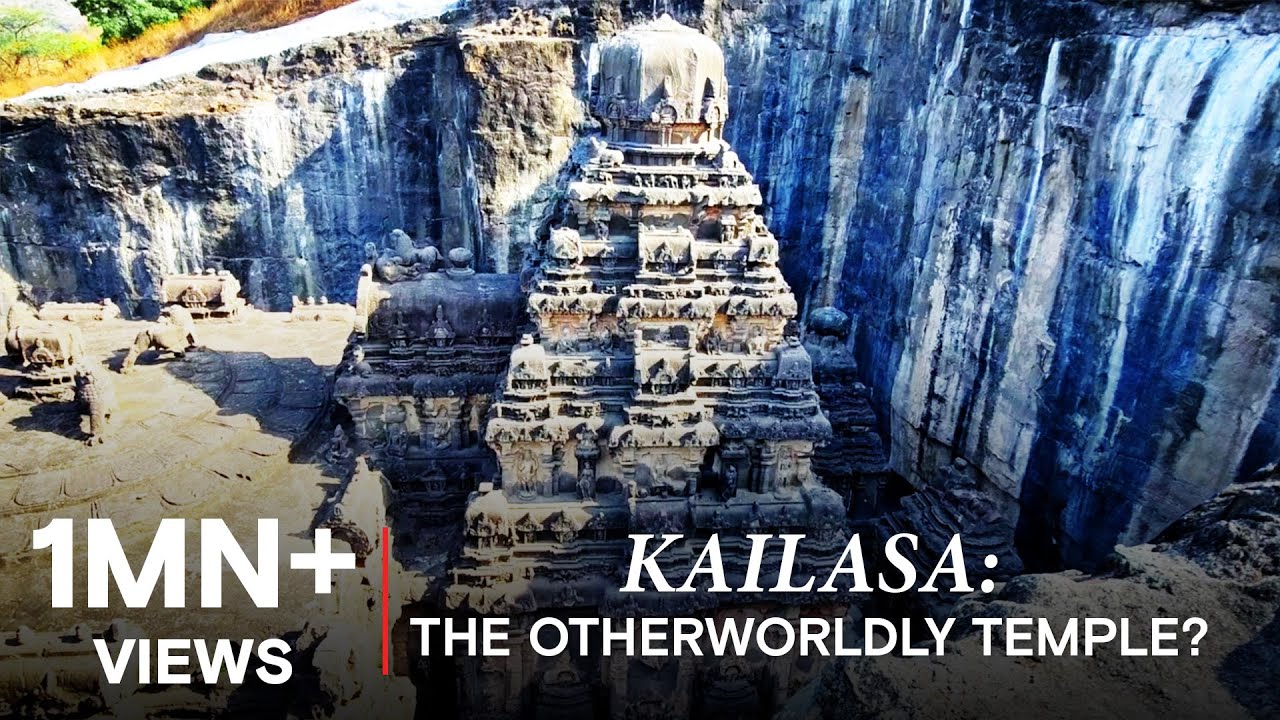
Rock Cut Kailasha Hindu Temple in Himalayan Volcanic Mountain India
#mystery
Ancient Temples Built by Gods or Humans #ancienthistory #ellora #cave #Kailasa #Temple #Ancient #rockcarved #india #archaeology #ancientarchitects
ancient lost civilisation,ancient indian civilisation,kailasa temple,ancient architects,ancient high technology,ancient aliens,phenomenal travel videos,ancient aliens india,mount kailash pyramid,ancient mysteries,ancient technology,stairway to heaven,ellora caves,india history,ancient india,history channel,mystery history,history of india,mount kailash,phenomenalplace.com,history,praveen mohan,bright insight,lord shiva,hinduism,maharashtra,india
How an entire four story Temple Complex was carved into Himalayan Basaltic Bedrock.
The Kailasha Temple Complex, in India, is said to have been constructed during the years 600 AD to 1000 AD; it was not constructed using the expected standard brick and mortar of the period, but was instead functionally sculpted directly onto, or into, a rock mountain.
Which means that the initial architectural plans and designs, served as a blueprint to create, not just a facade but a fully functional building with rooms, hallways and arched ceilings, which several generations of stone carvers, artisans and masons were able to match all the techniques and designs needed.
The entire Kailasha Temple Complex, was cut into a single mountain of volcanic rock, and was built from the top of the mountain down to its base. This unusual decision called for 200,000 tons of volcanic rock to be excavated from the mountain.
However, during its construction, the material doesn't seem to have been quarried as blocks and lifted out, instead it seem as if they used some sort of grinding process, much like how bedrock would typically be breached, in the modern industrialized world, with diamond tip rotary drilling rigs, rather than by chiseling and hammering or blasting. As, technically all violent or abrasive ways of removing material would have cause severe structural damage and compromised to the underlying bedrock of the complex, and would have left huge piles of rubble to be removed from the construction site. However, no major structural damage is identifiable on the walls or pillars of the complex, and the 200,000 tons of material removed, as blocks or as rubble piles, has never been located or identified anywhere near or around the vicinity of the complex or any neighboring village or city.
The Kailasha Temple Complex was created through a single, huge top-down excavation into the volcanic basaltic rock of the mountain. Basaltic rock types are typically the base material of continental plates, where the hardened crust meets the molten magma of the planet's mantle, and is a type of igneous rock that is harder than both granite and andesite. Essentially, the mountain itself, within which the temple was sculpted, is made from rocks that were pushed up millions of years ago, by the tectonics of the planet. As such, basaltic rocks do not erode or weather away as fast as limestone and volcanic tuff, and typical pickaxes, shovels, hammers and chisels can do no real damage to these types of rocks.
Beyond this, in another version of the story of the creation of the Kailasha Temple Complex, construction is generally attributed to the Rashtrakuta king Krishna I (from 756-773 AD). Which, would make the temple complex only 1200 years old, and would imply that its construction is encompassed within an 18 year window, rather than the 400 year window we initially discussed.
The Muslim ruler, Mughal King Aurangzeb who destroyed thousands of Hindu temples, across India, also tried to destroy the Kailasa Temple. It is said that 1000 persons were sent to destroy the temple in the year 1682. They worked for 3 years, using stones, pickaxes, hammers and chisels, but they were only able to break and disfigure some of the statues and relief carvings; and no real structural damage was done to the buildings or caves.
Therefore, if a team of 1000 persons had such an arduous task of defacing the temple some 500 years ago, then the technical logistics of constructing the temple by carving down, rather than carving up from the base, must have been an even more immense task, some 1200 years ago. As, carving down from the top of the mountain indicate that the builders initially surveyed the entire layout and contour of the untouched mountain, to attain a 100% accurate three dimensional mapped out design of the first stage of bulk material removal, down to a 10th of an inch in accuracy; which, had to match perfectly with a secondary legacy three dimensional map of all the rooms, walls, bridges, walkways, entrance ways, windows, doorways, and ceilings, yet to be constructed; which, then all had to fit together with the planned three dimensional layout and allowances for the detailing process of the intricate relief carvings and statues to be added at the end.
Повторяем попытку...

Доступные форматы для скачивания:
Скачать видео
-
Информация по загрузке:


![The Complete ELLORA CAVES [4K]: World's greatest rock-cut Temples | Wonders of Ancient India, Ep. 4](https://imager.clipsaver.ru/6jgbM6i67dU/max.jpg)