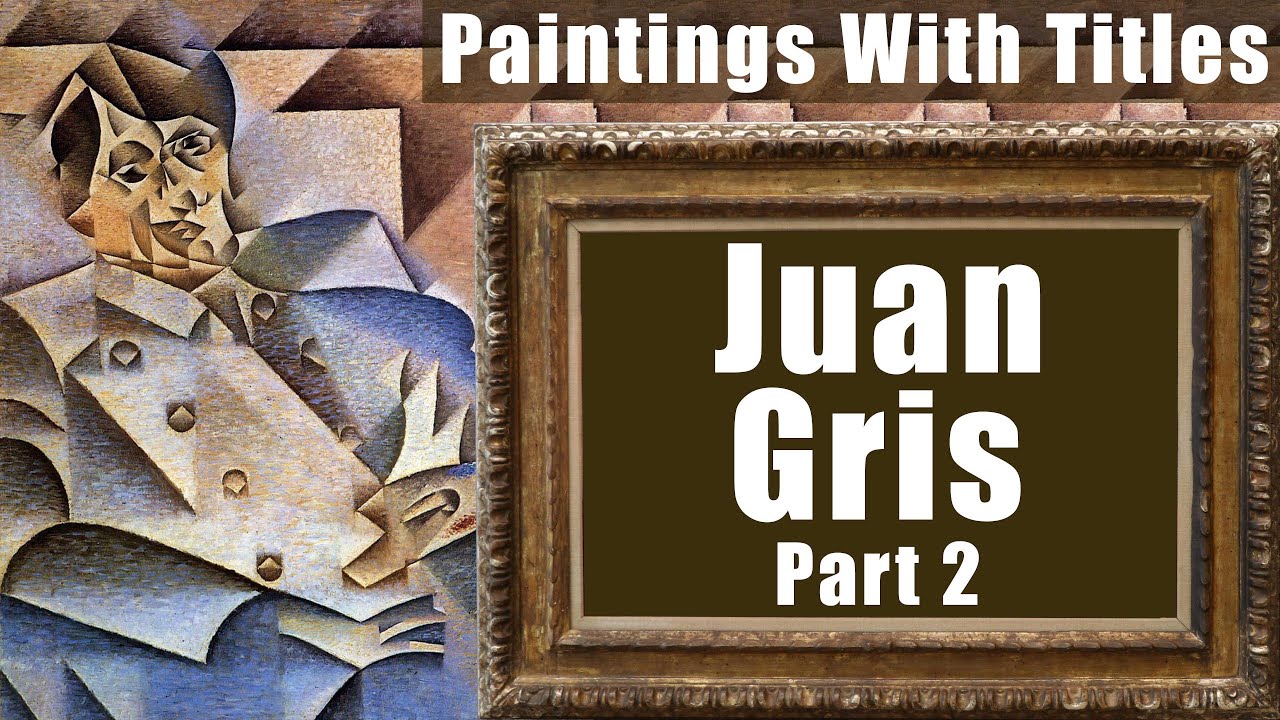
Juan Gris Part 1 - 100 Paintings With Name.
Автор: Masterpieces In Detail
Загружено: 2021-06-07
Просмотров: 2614
Описание:
Juan Gris
José Victoriano González-Pére
Born: March 23, 1887; Madrid, Spain
Died: May 11, 1927; Paris, France
Active Years: 1911 - 1927
Nationality: Spanish
Art Movement: Cubism
Painting School: École de Paris
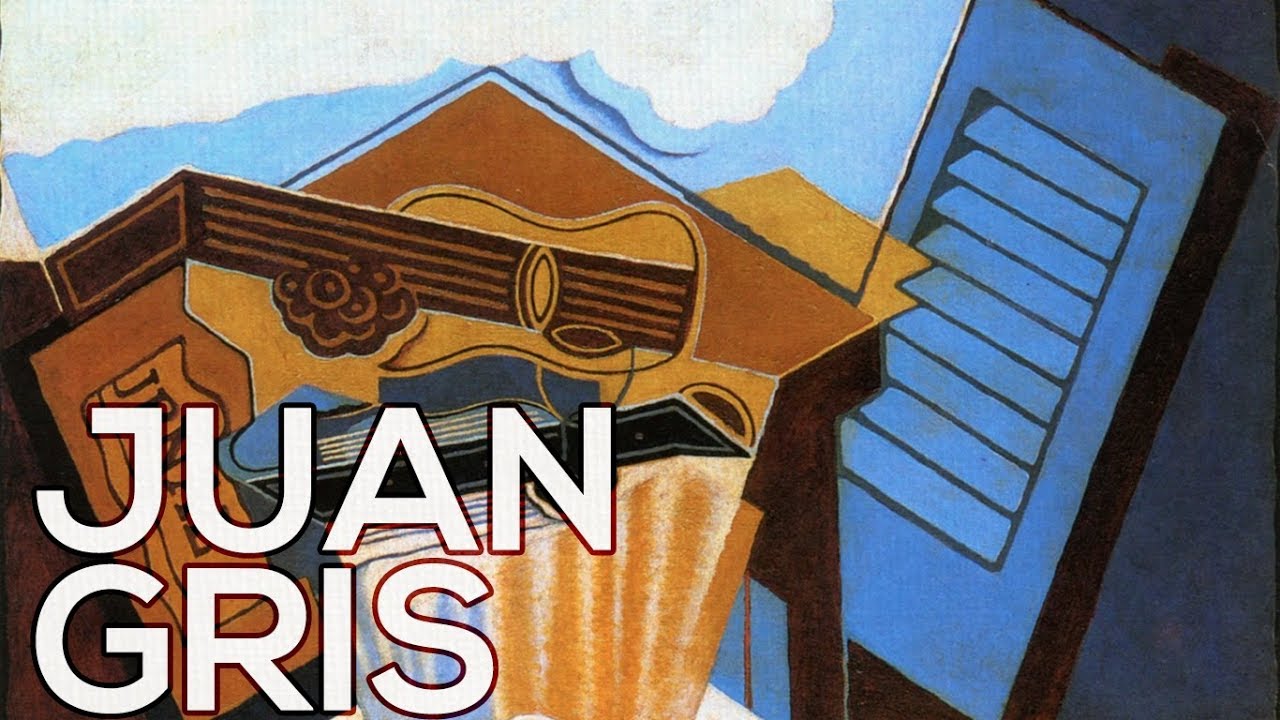
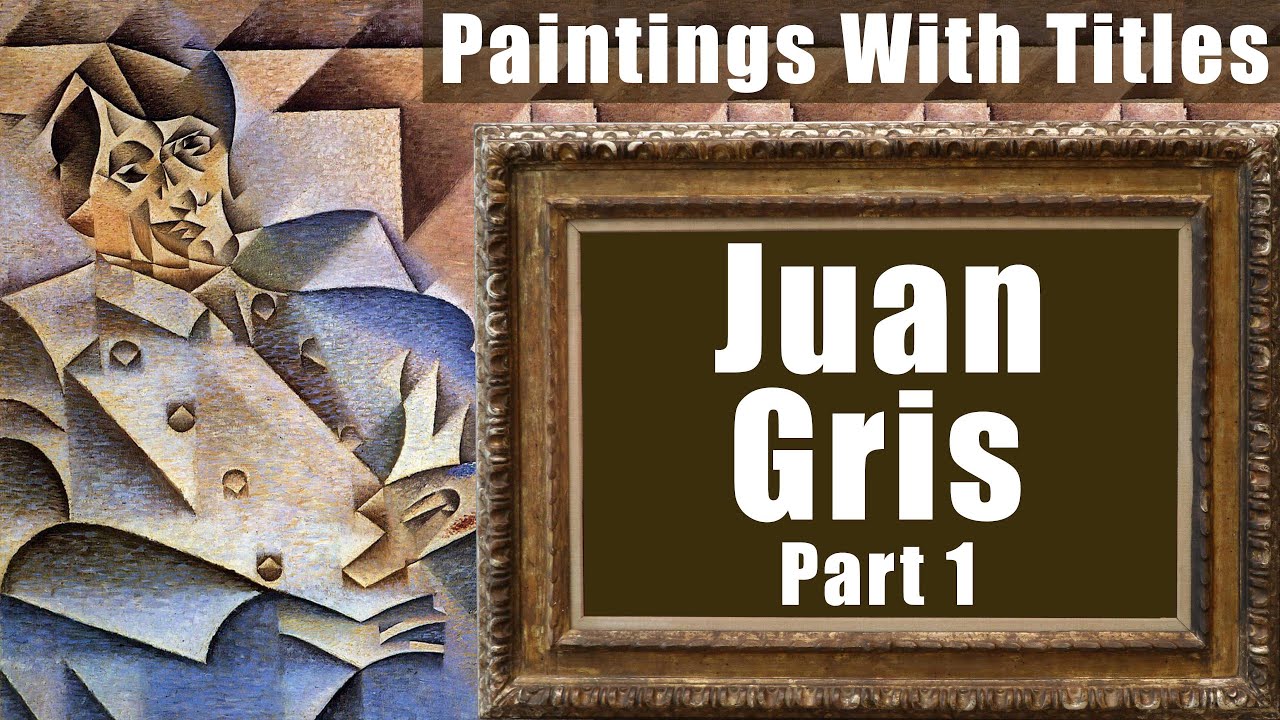
Juan Gris is recognized along with Pablo Picasso, Georges Braque, and Fernand Léger as one of the four major figures in Cubism, the avant-garde 20th-century art movement that revolutionized European painting and sculpture. Gris was born in 1887 in Madrid, where he later studied engineering from 1902 to 1904. Gradually, he started to shift his attention to drawing and began creating illustrations for local periodicals. In 1906, Gris moved to Paris, to the Montmartre neighborhood, where he met Pablo Picasso, who introduced him to the leading avant-garde artists, poets, and critics of the time: George Braque, Guillaume Apollinaire, Gertrude Stein, Max Jacob, and Pierre Reverdy. Gris worked as a graphic artist, creating drawings for political and satirical magazines. Influenced by his environment, he started to pursue painting seriously in 1911. He made his artistic debut in the 1912 Salon of Independent Artists with The Portrait of Pablo Picasso (1912), a painting that is considered one of the finest examples of Cubist portraiture.
In 1913, under the influence of Picasso and Braque, Gris began to experiment with collage and, more specifically, papier collé (cut and pasted paper). Through these artistic experiments, Gris contributed to the development of Synthetic Cubism – a later phase of Cubism that emphasized the flat quality of the image. Gris’s style was characterized by the structured geometric compositions that presented fragmented objects and overlapping planes. This style was encompassed in paintings like Still Life before an Open Window, Place Ravignan (1915), and Newspaper and Fruit Dish (1916). In comparison to Braque and Picasso, Gris had a more theoretical approach that resulted in more austere and organized compositions. From 1916 onward, he turned his attention to painting figures, creating more distilled compositions with more simplified geometric structures, like Portrait of Madame Josette Gris (1916) and Seated Woman (1917). In both portraits, the artist flattened the image, almost eliminating the distinction between the subject matter and the background.
Throughout World War I, Gris worked in Paris. After the war, he had his first major solo exhibition at Rosenberg’s Galerie l’Effort Moderne in Paris in 1919. Gris’s health began to deteriorate in 1922, and he moved to Boulogne-sur-Seine in the Western suburbs of Paris. Between 1922 and 1924, Gris designed stage sets and costumes for Sergei Diaghilev’s ballets, Les Tentations de la Bergère, and La Colombe. During this period, he also wrote essays that explained his aesthetic theories. In 1924, Gris delivered the lecture “Des possibilités de la Peinture” (The Possibilities of Painting) at the Sorbonne in Paris. Some of his major exhibitions include the 1923 shows at the Galerie Simon in Paris and the Galerie Flechtheim in Berlin and the 1925 show at the Galerie Flechtheim in Düsseldorf. Gris died from kidney failure on May 11, 1927, at his home in Boulogne-sur-Seine. He was only 40 years old.
Thank you so much for watching this video, we hope you enjoyed it!
Don't forget to share it, like and subscribe.
SUBSCRIBE: https://www.youtube.com/channel/UCOVh...
Повторяем попытку...
Доступные форматы для скачивания:
Скачать видео
-
Информация по загрузке: