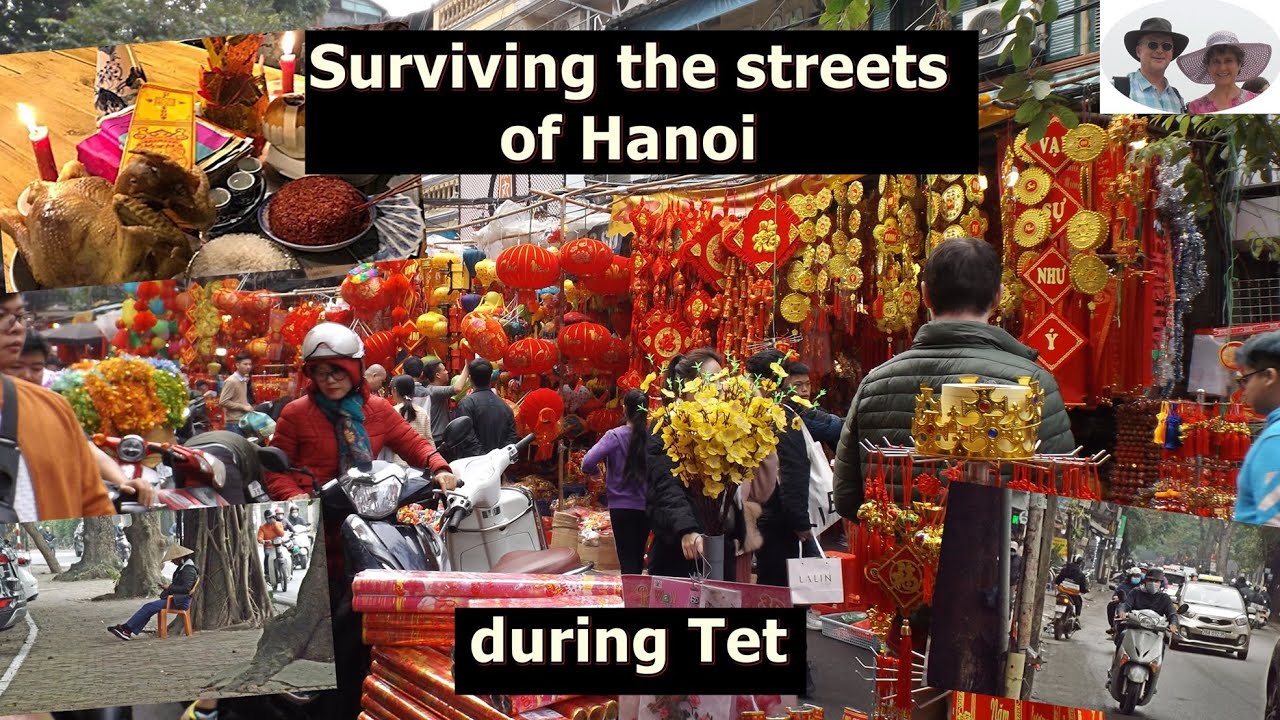
Surviving the streets of Hanoi during Tet
Автор: Sherrie And Chris
Загружено: 2026-02-21
Просмотров: 7
Описание:
Tết (short for Tết Nguyên Đán) is Vietnam's most important cultural celebration, marking the Vietnamese Lunar New Year and the arrival of spring, typically falling in late January or February. It's a deeply significant time for family reunions, honoring ancestors, cleaning homes, decorating with lucky symbols like apricot blossoms, and wishing for prosperity in the new year, with traditional foods like bánh chưng (sticky rice cakes). Our AirBnB hosts kindly invited all the residents to a Tết party.
Bánh chưng (or banh chung) is a traditional Vietnamese square-shaped sticky rice cake, a cultural staple for the Tết (Lunar New Year) holiday, symbolizing gratitude and the earth. It's made with glutinous rice, mung beans, and pork, wrapped in banana leaves and boiled for hours, creating a savory, fragrant dish essential for family gatherings and ancestral offerings. Making bánh chưng is a cherished, communal activity, representing Vietnamese heritage and family unity. Our AirBnB hosts kindly took us to their farm to join in this family tradition.
Hữu Tiệp Lake (B-52 Lake): The remnants of one US B-52, including large sections of the fuselage, lie partially submerged in this small lake, transformed into a tranquil memorial.
B-52 Victory Museum: Near the B52 Lake, this museum displays artifacts and details the air defence strategies that led to the shooting down of B52s, serving as a powerful reminder of Vietnamese resistance.
Lotte Centre Hanoi is a 272-meter, 65-story skyscraper in Ba Đình, Hanoi, Vietnam, functioning as a mixed-use complex with offices, shopping, and a hotel, famous for its 65th-floor SkyWalk observation deck featuring a glass floor for panoramic city views.
Thang Long Water Puppet Theatre in Hanoi has its roots in this 11th-century tradition, where puppeteers used large rods to support the puppets, creating the illusion of their movements across the water as they stood hidden behind a screen.
The Ho Chi Minh Museum is in Hanoi, Vietnam. Constructed in the 1990s, it is dedicated to the late Vietnamese leader Ho Chi Minh and Vietnam's revolutionary struggle against foreign powers.
It is in the Ho Chi Minh complex, close to the Ho Chi Minh Mausoleum.
Hoang Thanh Thang Long (The Imperial Citadel of Thang Long) is a documentary of Vietnamese history layers. It remains living evidence that watched the changes of the city, from the early dynasties, war time and modern days. Its construction began in 1010 and was completed in early 1011. More recently much was demolished during the French occupation and then in 1967, the D67 House & bunker were built behind the “Dragon House” to protect high-level military meetings during the air war over the North. Most recent archaeological diggings uncovered layers from the 7th century. For visitors today, the World Heritage property comprises the 18 Hoang Dieu archaeological area and the central axis with the Flag Tower, Doan Mon, Kinh Thien foundation, Hau Lau, and Bac Mon/North Gate.
Vietnamese Women’s Museum in Hanoi celebrates Vietnamese women, who make up half the population and play an irreplaceable role in both families and society. With its rich cultural heritage, Vietnam honours these brave and warm-hearted individuals through comprehensive exhibits and stories.
Hỏa Lò Prison was a prison in Hanoi originally used by the French colonists in Indochina for political prisoners, and later by North Vietnam for U.S. prisoners of war during the Vietnam War. During this later period, it was known to American POWs as the "Hanoi Hilton".
Hanoi Train Street is a famous, narrow railway cutting through the Old Quarter where trains pass mere inches from homes and cafes. It is still open with controlled access, requiring entry through a local café. Authorities have proposed halting passenger trains here for urban renewal (2026), so the future of this attraction is uncertain.
The Temple of Literature is the first university complex in Vietnam. Not only is it a cultural and historical relic, it is also where many students come to pray for luck in their upcoming exams and studies.
Ngoc Son Temple Meaning 'Temple of the Jade Mountain', Hanoi's most visited temple sits on a small island in the northern part of Hoan Kiem Lake, connected to the lakeshore by an elegant scarlet bridge (called Cầu Thê Húc).
The Vietnam Museum of Ethnology focuses on the 54 officially recognised ethnic groups in Vietnam. This fabulous collection relating to Vietnam's ethnic minorities features well-presented tribal art, artefacts and everyday objects gathered from across the nation, and examples of traditional village houses.
Повторяем попытку...
Доступные форматы для скачивания:
Скачать видео
-
Информация по загрузке: