Germans Expected Weak Defense — But One BAR Gunner Held Bridge for 90 Minutes Alone
Автор: Decision Military
Загружено: 2025-10-18
Просмотров: 16
Описание:
When German Kampfgruppe Hansen rolled toward the Salm River bridge at Trois-Ponts on December 19, 1944, they expected an easy crossing. The Americans were retreating. The bridge appeared undefended. Twenty Panzer IVs and three hundred SS infantry prepared to punch through to the Meuse River—a breakthrough that could collapse the northern shoulder of the Bulge.
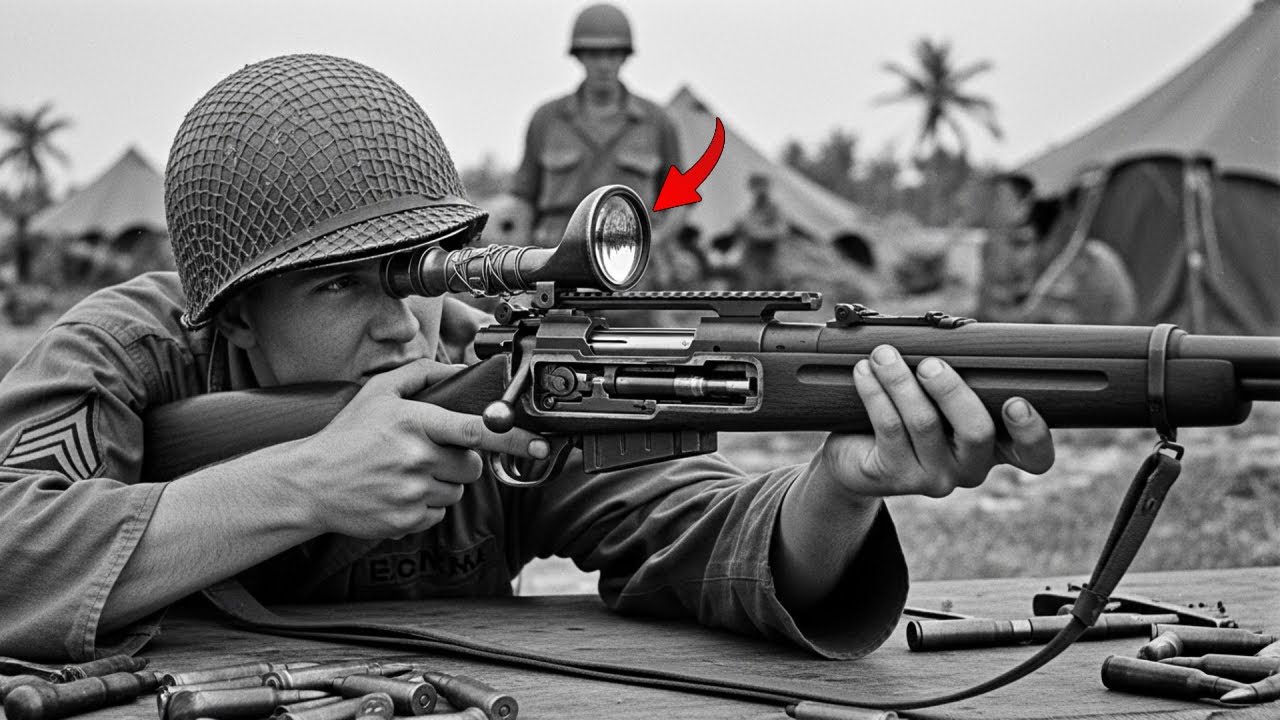
What they found instead was Private Eddie Novak. One man. One Browning Automatic Rifle. And a physics lesson the Germans would never forget.
Behind Novak, seventy-three wounded Americans were being evacuated from a field hospital—men who couldn't move on their own, who needed time to escape. Novak's orders were clear: retreat with the others. Instead, he walked back to the bridge and decided to hold it alone.
For ninety minutes, Novak did something no field manual taught. He didn't try to destroy the German tanks—that was impossible with a BAR. Instead, he used suppressive fire to exploit the Panzer IV's biggest weakness: vision. Every time a tank advanced, Novak put rounds on the driver's vision slit. The bullets couldn't penetrate, but they forced the crew to button up completely. Blind tanks stopped. Hesitated. The formation broke down.
When the Germans laid down smoke to advance under cover, Novak adapted again. He closed his eyes and tracked the Panzers by sound—diesel engines, squeaking tracks, transmission whine. Acoustic targeting, a principle he'd learned in college physics. He fired at the sounds. The tanks veered off course, collided with each other, stalled in confusion.
The German company commander couldn't understand it. How was one rifleman stopping a battle group? Intelligence estimated "at least one company with heavy weapons" was defending the bridge. They never realized it was a single soldier with a rifle and an understanding of physics.
By the time American M18 Hellcat tank destroyers arrived, the German Panzers were packed in a tight kill zone, their advance shattered by one man's fire. The Hellcats destroyed two tanks and scattered the rest. Kampfgruppe Hansen's attack was broken. The six-hour delay they suffered at Trois-Ponts meant they never reached their objective. The northern shoulder of the Bulge held. Three thousand American lives were saved.
Eddie Novak received the Silver Star. The citation credited his courage and covering fire. It didn't mention physics. It didn't mention that he'd turned a squad automatic weapon into a force multiplier by understanding psychology, acoustics, and enemy tactics better than the enemy understood them themselves.
After the war, Novak became a high school physics teacher in Chicago. He taught for thirty-eight years. When students asked about his Silver Star, he'd tell them: "Education matters. Even in war. I didn't win that fight with courage. I won it with freshman physics and stubbornness."
The BAR he used that day is now in the National Infantry Museum at Fort Benning. The German after-action reports still describe "unexpectedly strong resistance" at Trois-Ponts. And twelve survivors from that field hospital attended Novak's funeral in 2003—each one alive because a physics student refused to retreat.
This is the story of how one man held a bridge for ninety minutes against twenty tanks. Not with firepower. With knowledge.
Повторяем попытку...

Доступные форматы для скачивания:
Скачать видео
-
Информация по загрузке: