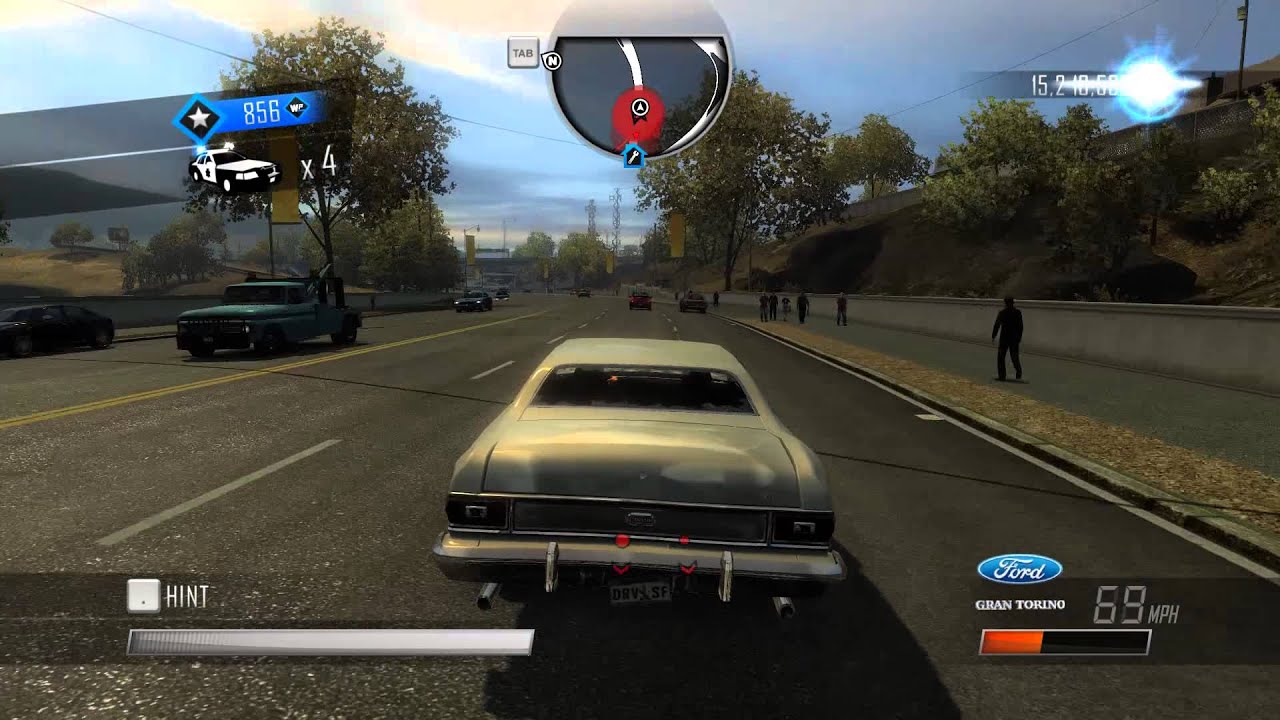
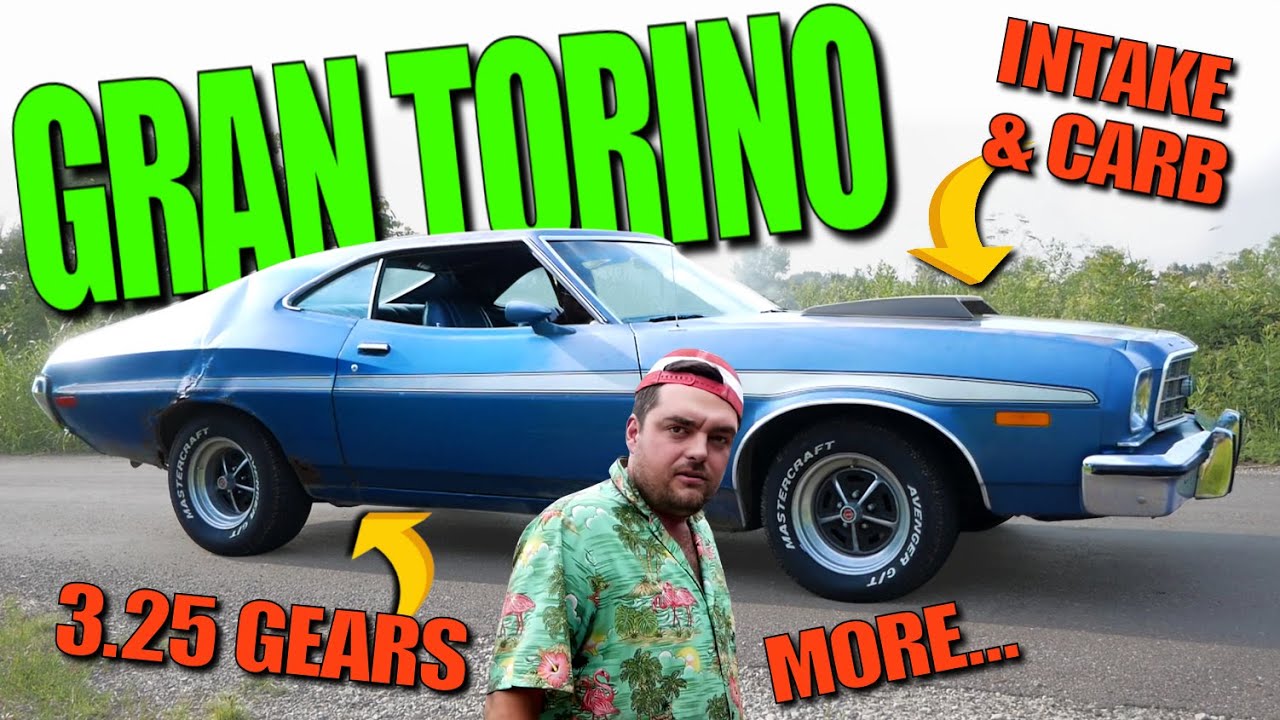
Driver: San Francisco - Ford Gran Torino (1974) | Non-commentary
Автор: Game Destroyer
Загружено: 2014-04-13
Просмотров: 9529
Описание:
Be a member!
/ @gamedestroyer Driver: San Francisco - Ford Gran Torino (1974)
The Ford Torino was an intermediate automobile produced by the Ford Motor Company for the North American market between 1968 and 1976. The car was named after the city of Turin (Torino, in Italian). The Torino was initially an upscale version of the intermediate sized Ford Fairlane, which Ford produced between 1962 and 1970. After 1968, the Fairlane name was retained for the base models with lower levels of trim than those models which wore the Torino name. During this time, the Torino was considered a subseries to the Fairlane. By 1970 Torino had become the primary name for Ford's intermediate, and the Fairlane was now a subseries of the Torino. In 1971 the Fairlane name was dropped altogether and all Ford intermediates were called Torino. This name was one of several originally proposed for the Mustang while in development. The Torino was essentially a twin to the Mercury Montego line.
Most Torinos were conventional cars, and generally the most popular models were the 4-door sedans and 2-door hardtops. However, Ford produced some high-performance versions of the Torino by fitting them with large powerful engines, such as the 428 cu in (7.0 L) and 429 cu in (7.0 L) "Cobra-Jet" engines. These cars are classified as muscle cars. Ford also chose the Torino as the base for its NASCAR entrants, and it has a successful racing heritage.
The 1974 model year saw more revisions to the Torino line. Government safety regulations now required that the rear bumpers must also meet the 5 mph (8.0 km/h) standard, so all Torinos had the rear bumper and tail lamp panel redesigned. The new rear bumpers were much larger, square shaped, and sat lower on the body. No longer was there a roll pan located below the bumper as on the 1972--73 models. The tail lights were now shorter, more square, and wrapped around the corner, which eliminated the need for rear side marker lights. The fuel filler neck moved to a position above the bumper, rather than below as on 1972--73 models. It was now behind an access door in the centre of the tail light panel just below the trunk lock, rather than behind the licence plate. The front fascia for Gran Torinos was revised for 1974. The new grille was of similar shape to the 1973, but was slightly larger and divided into 8 equal sized vertical sections. A revised emblem was located on the left side of the grille. It had a much finer mesh pattern, and now had the parking lamp lenses mounted vertically behind the outer sections. The front bumper was revised to be slightly more pointed, and the bumper guards were moved more towards the centre of the bumper compared to 1973 models. The license plate bracket was relocated to the driver's side of the bumper. Torino models carried on with the same front fascia as 1973; however, its front bumpers were revised similarly to the Gran Torinos and the license plate remained in the center. Gran Torino Broughams featured a full width red lens across the rear, but the centre portion was non-functional. Broughams and Squires had a stand-up hood ornament inplace of the emblem on the grille.
Torino added several new options and features for 1974. Gran Torino 2-doors now were available with "opera windows", a popular option during the mid-1970s, while Brougham models had these as a standard feature. All 2-door Torinos had fixed rear windows unlike the 1972--73 models. The Torino was becoming more luxury oriented and new luxury features were available. These included a leather-wrapped steering wheel, split bench seat, an electric sunroof, and speed control with steering wheel controls. Gran Torino hardtops and sedans had a new rear fender skirt option, to give the Torino a longer, lower look. The trim was revised on 1974 models; moldings now ran on the rocker panels instead of the lower doors. Brougham and Sport models had an extra chrome molding that ran on the lower fender edge between the front wheelwell and bumper; this gave the appearance of bumper-to-bumper chrome. Squires had no lower body moldings. All 1974 Torinos featured the seat belt-interlock system, as mandated by the U.S. government. This short-lived safety system would be removed after the 1974 model year. The competition suspension was no longer offered, and the only suspension option was a revised heavy-duty suspension package. This option was available on all Torinos except the Elite, and included a larger front sway bar and heavy-duty front and rear springs. Heavy-duty shocks and a rear sway bar were included in this package on 2-door and 4-door sedan models only; station wagons did not include these features. You can support me here:
https://ko-fi.com/gamedestroyer
Повторяем попытку...
Доступные форматы для скачивания:
Скачать видео
-
Информация по загрузке:






![DiRT 4 - Mini Cooper S Gameplay (PC HD) [1080p60FPS]](https://imager.clipsaver.ru/4pErOhlFK6s/max.jpg)


![Driver San Francisco - Alfa Romeo 8C Competizione - Open World Free Roam Gameplay (PC UHD) [4K60FPS]](https://imager.clipsaver.ru/ePTdUjMT1HI/max.jpg)