INTRODUCTION: THE LUWIANS AND THEIR CONTEMPORARIES IN LATE BRONZE AGE WESTERN ASIA MINOR
Автор: European Association of Archaeologists
Загружено: 2021-04-02
Просмотров: 1661
Описание:
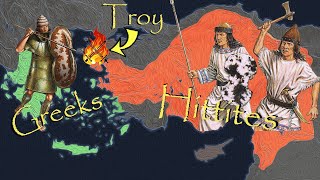
Whilst we know of numerous Late Bronze Age (LBA; c. 1700-1200 BC) sites, including a number of very sizable ones, in western Asia Minor, remarkably little archaeological fieldwork has focused on uncovering these settlements and establishing their role vis-a-vis their surroundings. Contemporary texts indicate that the region was of major political and military importance, and that individual states and federations at times challenged Hittite hegemony over Anatolia. Yet most text books largely ignore the region’s importance and consider it as a conflict zone between the two great powers to its west (Mycenaean Greece) and east (Hatti). To overcome the rigid Eurocentric paradigms at the core of Aegean prehistory, a discipline conceived by Arthur Evans a century ago, it has recently been suggested to use “Luwian” as an umbrella term for the petty states and various ethnic groups which populated western Asia Minor during the Middle and Late Bronze Age. This session now aims to contextualize the region’s role and the interactions with its neighbours – including Greece, central Anatolia, the Levant, Egypt, Cyprus, and the Balkan. By scrutinizing the archaeological and philological evidence from all sides of the Aegean as well as the Balkan, and by discussing fieldwork results and new interpretations of available evidence, the session aims to present western Anatolia not simply as a buffer zone between other regions and states, but as a region with its own socio-political and cultural developments, that was fully integrated and played an active role in the LBA eastern Mediterranean.
Author(s): Zangger, Eberhard (Luwian Studies)
Повторяем попытку...

Доступные форматы для скачивания:
Скачать видео
-
Информация по загрузке: