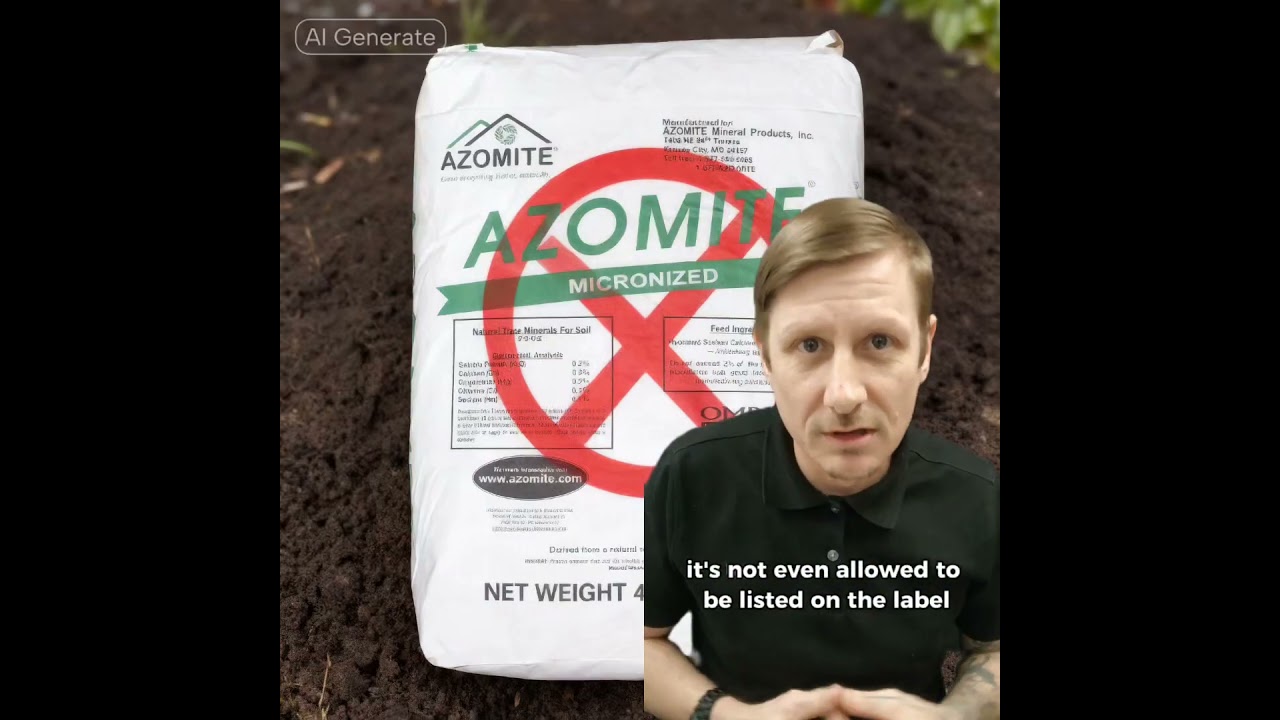
This is full of aluminum and heavy metals! (azomite) what you should know.
Автор: Brandon Rust
Загружено: 2025-11-25
Просмотров: 312
Описание:
Comment your thoughts 🧐💭 below 👇
Azomite gets marketed as an “A–Z” mineral source… but the reality?
It’s not a strong micronutrient amendment — and there are far better, more efficient options for your soil.
Let’s break down what it actually does (and doesn’t do).👇
Many growers think Azomite is a powerhouse mineral blend — but when you look at the label, the truth becomes obvious:
📉 1. Extremely Low Micronutrient Content
Azomite contains trace levels of iron, manganese, zinc, copper, boron, and molybdenum — but the amounts are so low they barely move the needle in real-world soil performance.
It’s not a reliable way to fix deficiencies or build nutrient density.
🪨 2. What It Does Offer
Azomite does provide some benefits — mostly in soil texture and minor trace inputs, including:
Slight improvements in soil structure
Very small additions of trace minerals
Mild buffering capacity
But none of these are unique. And none justify the hype.
⚡ 3. Better Alternatives Exist
Products like:
Basalt rock dust (higher plant-usable silica + paramagnetic benefits)
Carbon-based humates (increase CEC, nutrient retention, and mineral availability)
True micronutrient blends (targeted and bioavailable)
Biologically activated mineral sources (microbially chelated for higher uptake)
All deliver stronger nutrient efficiency, better soil performance, and more measurable results.
🧠 4. Efficiency Matters
It doesn’t matter how many elements a product “contains.”
What matters is bioavailability, solubility, and how plants actually use it.
Azomite checks the label box — not the agronomic box.
In short:
Azomite isn’t harmful — it’s just inefficient.
There are modern mineral inputs that outperform it in every way: nutrient availability, soil structure, plant response, and cost efficiency.
Повторяем попытку...
Доступные форматы для скачивания:
Скачать видео
-
Информация по загрузке: