ycliper

Популярное

Музыка Кино и Анимация Автомобили Животные Спорт Путешествия Игры Юмор

Интересные видео

2025 Сериалы Трейлеры Новости Как сделать Видеоуроки Diy своими руками

Топ запросов

смотреть а4 schoolboy runaway турецкий сериал смотреть мультфильмы эдисон
Скачать

Rockwell hardness test simply explained (comparison with Brinell and Vickers)

Автор: tec-science

Загружено: 2025-01-22

Просмотров: 9771

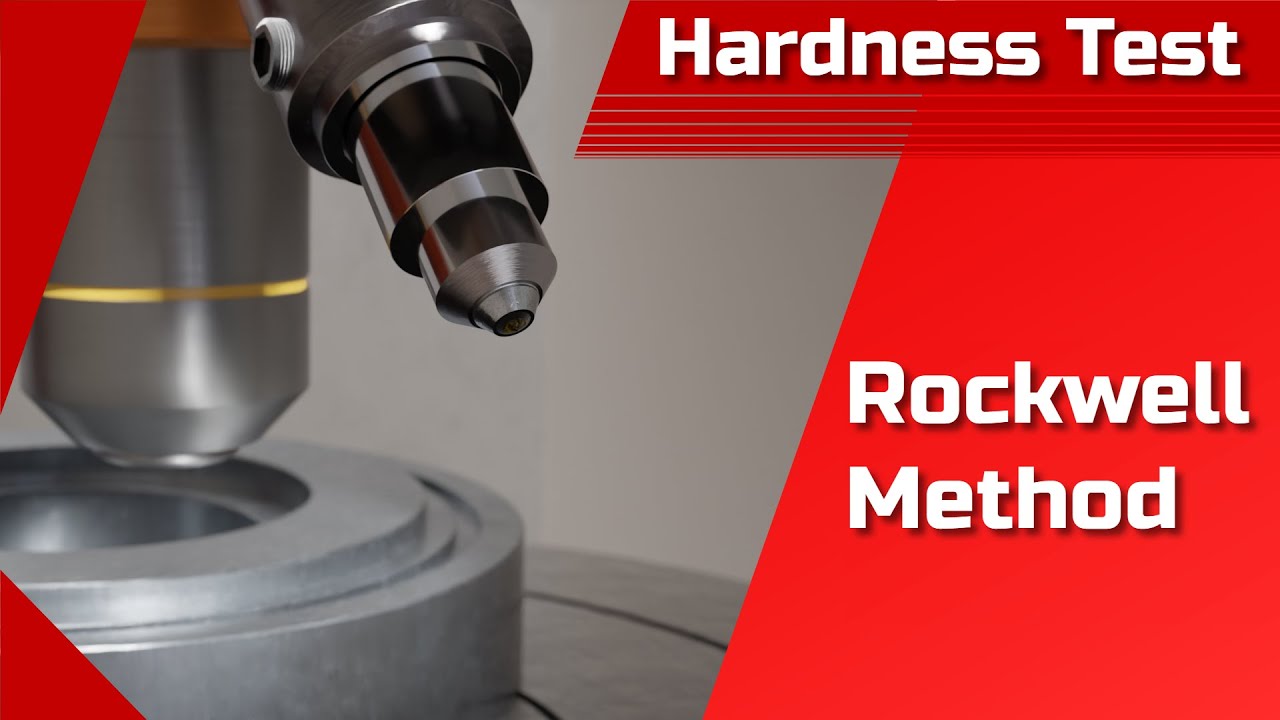
Описание: The Rockwell hardness test is one of the most commonly used methods to determine material hardness. Unlike the Brinell and Vickers methods, which measure hardness based on the impression area, the Rockwell method determines hardness using the penetration depth of the indenter. A hard metal ball or a diamond cone is used as the indenter. The main advantage of the Rockwell test is its suitability for automation and quick execution, as no optical measurement is required. This makes it ideal for industrial mass production.

The process begins with applying a minor load F0 of 98 Newton to compensate for surface irregularities. The major load F1 is then applied, driving the indenter deeper into the material. After removing the major load, only the minor load remains, and the difference in penetration depth is measured, which is used to calculate the hardness value.

A diamond cone is used for hard materials, measuring hardness on a scale from 0 to 100, with a maximum penetration depth of 0.2 mm. For softer materials, hard metal balls are used, and the reference depth increases to 0.26 mm. Different scales are employed: HRB for structural steel and brass, HRC for hardened steel, and HRA for thin sheets. Each scale has specific force and hardness value ranges. Accurate calibration is crucial, as values outside the acceptable range require procedural adjustments.

Minimum specimen thickness is also important: it must be ten to fifteen times the penetration depth, depending on the indenter type. The distance from the impression to the edge must be at least 1 mm, and the surface must be finely ground to avoid measurement errors.

The advantages of the Rockwell method include short testing times and excellent suitability for automation. However, drawbacks include sensitivity to surface impurities and limited depth measurement accuracy for very hard materials, where the Vickers method is more suitable. For heterogeneous materials like cast iron, the Brinell method provides better results. A summary table outlines the pros and cons of each method.

00:00 How is the Rockwell hardness test carried out?
01:28 How is Vickers hardness calculated?
03:06 Testing with diamond cones
05:10 Testing with carbide balls
07:11 Minimum edge and indentation distance, and sample thickness
08:54 Advantages and disadvantages (Comparison: Brinell, Vickers and Rockwell)

Не удается загрузить Youtube-плеер. Проверьте блокировку Youtube в вашей сети.
Повторяем попытку...
Rockwell hardness test simply explained (comparison with Brinell and Vickers)

Поделиться в:

Доступные форматы для скачивания:

Скачать видео

  • Информация по загрузке:

Скачать аудио

Похожие видео

Tensile test simply explained: Key material properties and stress-strain diagram

Tensile test simply explained: Key material properties and stress-strain diagram

Brinell hardness test simply explained (introduction to hardness testing)

Brinell hardness test simply explained (introduction to hardness testing)

Rockwell Hardness Test Demonstration

Rockwell Hardness Test Demonstration

Полное руководство по процессу закалки стали | Закалка и цементация. Процесс термической обработки

Полное руководство по процессу закалки стали | Закалка и цементация. Процесс термической обработки

How to measure Vickers hardness on Micro Indentation?

How to measure Vickers hardness on Micro Indentation?

Surface hardening of steel | flame, induction, laser beam, case hardening and nitriding

Surface hardening of steel | flame, induction, laser beam, case hardening and nitriding

Орешник это модернизированный Рубеж? И как украинцы узнали об ударе 9 января заранее?

Орешник это модернизированный Рубеж? И как украинцы узнали об ударе 9 января заранее?

Как Сделать Настольный ЭЛЕКТРОЭРОЗИОННЫЙ Станок?

Как Сделать Настольный ЭЛЕКТРОЭРОЗИОННЫЙ Станок?

Эфир - Самое ЛЕТУЧЕЕ Вещество на Земле!

Эфир - Самое ЛЕТУЧЕЕ Вещество на Земле!

WM - Laboratorium Badanie twardości

WM - Laboratorium Badanie twardości

Почему средневековое железо никогда не ржавело, а ваше умирает через 2 года

Почему средневековое железо никогда не ржавело, а ваше умирает через 2 года

Испытание твердости по Роквеллу

Испытание твердости по Роквеллу

How a Hardness Tester Actually Works

How a Hardness Tester Actually Works

Universal Hardness Tester Prototype

Universal Hardness Tester Prototype

Почему железным дорогам не нужны деформационные швы

Почему железным дорогам не нужны деформационные швы

Bearing Arrangements | Mounting | Non-Locating | Adjusted | Floating | Back-to-Back | Face-to-Face

Bearing Arrangements | Mounting | Non-Locating | Adjusted | Floating | Back-to-Back | Face-to-Face

Basics of Radiographic Testing

Basics of Radiographic Testing

Hardness Units (Rockwell, Brinell, Vickers) - Measuring, Converting, & When to use.

Hardness Units (Rockwell, Brinell, Vickers) - Measuring, Converting, & When to use.

Quenching and tempering of steel | Heat treatment | Hardening | Quenching | Tempering

Quenching and tempering of steel | Heat treatment | Hardening | Quenching | Tempering

ROCKWELL HARDNESS TEST | 3D ANIMATION | ROCKWELL HARDNESS TEST PROCEDURE | VIDEO FOR SALE

ROCKWELL HARDNESS TEST | 3D ANIMATION | ROCKWELL HARDNESS TEST PROCEDURE | VIDEO FOR SALE

© 2025 ycliper. Все права защищены.


  • Контакты
  • О нас
  • Политика конфиденциальности


Контакты для правообладателей: [email protected]