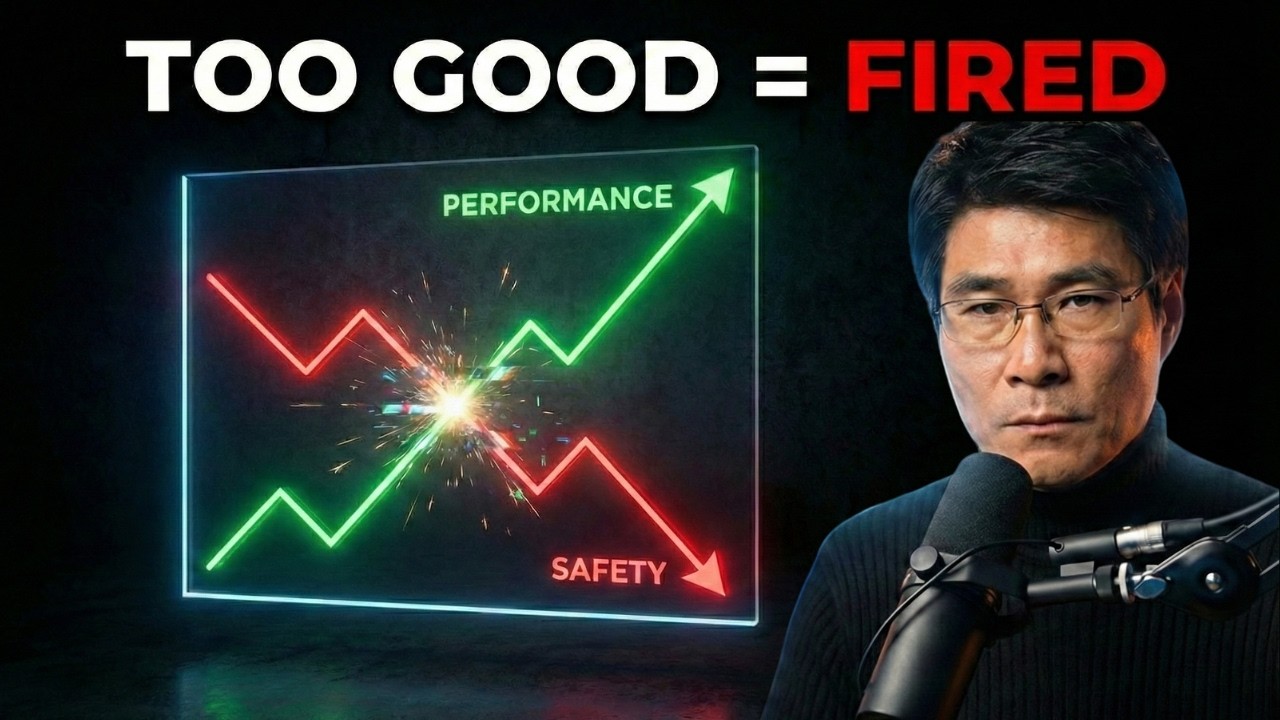
How the EU Lost the War on Corruption ?
Автор: Prof Jiang Xueqin:Explained
Загружено: 2026-02-12
Просмотров: 1
Описание:
Across Europe, anti-corruption agencies, transparency laws, and EU oversight mechanisms have expanded for decades. Yet corruption scandals keep multiplying—procurement fraud, lobbying capture, revolving doors, and billions in misused public funds. The uncomfortable reality is this: the EU didn’t fail to fight corruption by accident—its system is structurally vulnerable to it.
This isn’t just about a few corrupt politicians.
It’s the emergence of a bureaucratic corruption model where complexity becomes camouflage, accountability becomes fragmented, and enforcement becomes politically selective. Unlike national corruption systems with a clear chain of responsibility, EU-level governance often distributes power so widely that blame becomes almost impossible to assign.
🔍 What You’ll Discover:
Why EU anti-corruption frameworks often punish small actors while protecting large networks
How procurement systems become legal pipelines for fraud and insider allocation
Why “transparency” rules can increase corruption by making it harder to trace responsibility
How lobbying, consulting, and revolving-door careers normalize influence buying
Why enforcement becomes weaker the closer corruption gets to high-level institutions
📊 Key Statistics Revealed:
Billions in EU funds are lost annually through procurement manipulation and misallocation
Countries receiving the most EU funding often show the highest fraud-risk indicators
Corruption investigations frequently stall due to jurisdictional gaps and political shielding
Public trust declines even as “anti-corruption” spending increases
This analysis goes beyond simplistic “Europe is corrupt” narratives to examine how institutional design shapes corruption outcomes. We explore how fragmented oversight, weak centralized enforcement, and complex funding structures create a system where corruption can flourish without looking like corruption.
The evidence points to an uncomfortable conclusion: the EU didn’t lose the war on corruption because it lacks rules. It lost because the system produces plausible deniability at scale—and corruption thrives wherever accountability cannot be enforced.
Повторяем попытку...
Доступные форматы для скачивания:
Скачать видео
-
Информация по загрузке: