Gear Mechanism – Principle of Mechanical Advantage & Speed Ratio
Автор: Special Ed Hub
Загружено: 2025-11-28
Просмотров: 2937
Описание:
Gear Mechanism – Principle of Mechanical Advantage & Speed Ratio
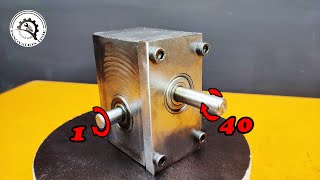
This setup shows interlocking gears mounted on a base. When one gear (usually connected to a motor or handle) rotates, it transfers motion to the other gears.
Physics Principles Involved
1. Law of Conservation of Energy
Energy is transferred from one gear to the next without being created or destroyed — only transformed from input rotational energy → output rotational energy.
2. Gear Ratio (Speed–Torque Relationship)
When a small gear drives a large gear,
➡️ Speed decreases
➡️ Torque increases
When a large gear drives a small gear,
➡️ Speed increases
➡️ Torque decreases
This mechanism clearly demonstrates how gears trade speed for force, or force for speed.
3. Newton’s Third Law of Motion
Each gear tooth pushes the next gear tooth with a force.
The second gear pushes back with an equal and opposite force.
This ensures smooth and continuous rotation.
4. Mechanical Advantage
Gears provide mechanical advantage by changing:
direction of rotation
magnitude of torque
speed of rotation
This allows small motors to lift heavy loads or turn large wheels.
Short Answer (for school notebook):
“This model demonstrates the principle of gear ratio where interconnected gears transfer rotational motion. A large gear driving a small gear increases speed, while a small gear driving a large gear increases torque. It works on Newton’s Third Law and conservation of energy, showing mechanical advantage in rotational systems.”
Повторяем попытку...

Доступные форматы для скачивания:
Скачать видео
-
Информация по загрузке: