GPM J1839-10: The Dead Star Sending Signals Every 22 Minutes Since 1988
Автор: Night Shift Stories
Загружено: 2026-03-02
Просмотров: 10
Описание:
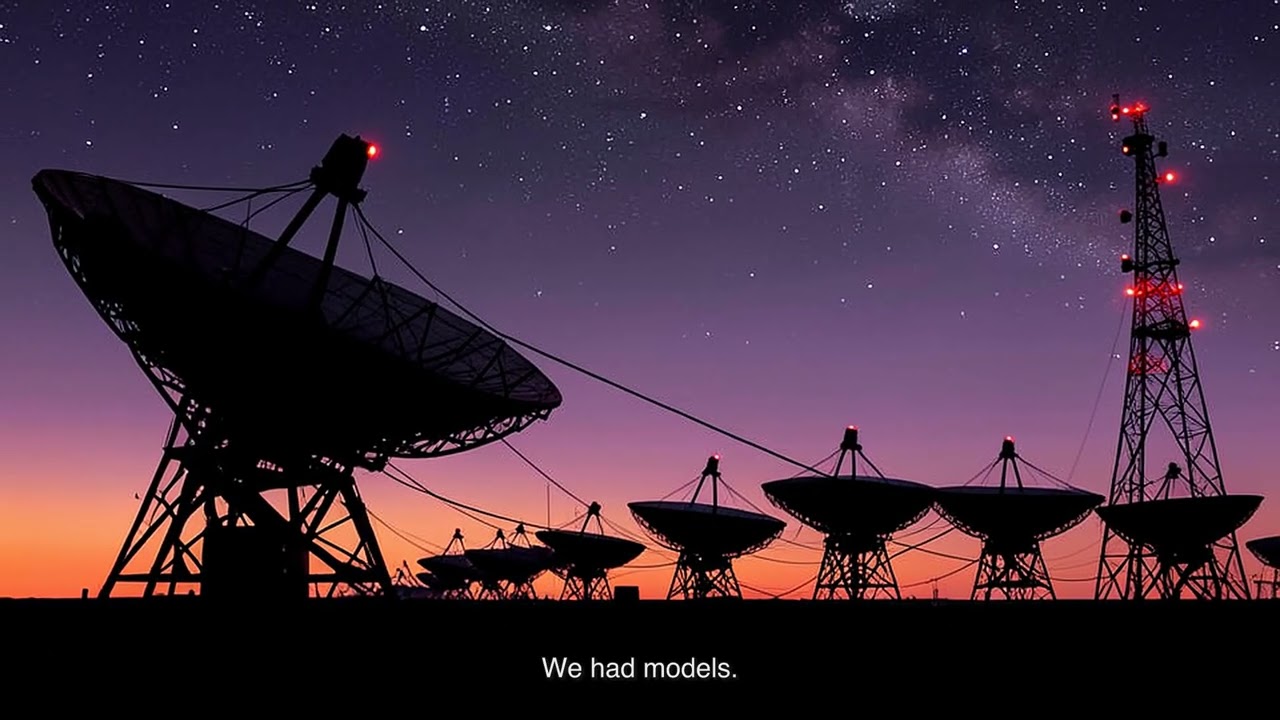
A dead star 15,000 light-years away has been sending unexplained radio signals to Earth every 22 minutes since 1988. GPM J1839-10 violates every known law of astrophysics — and scientists have no explanation.
Deep in the Scutum constellation, something is broadcasting. GPM J1839-10, discovered in 2022 but traced back through archival data to at least 1988, has been pulsing powerful radio bursts toward Earth with clockwork precision for over 35 years. Each pulse lasts between 30 and 300 seconds, with brightness varying by two orders of magnitude.
What makes this signal impossible? According to pulsar physics, neutron stars that rotate this slowly — once every 22 minutes — fall below the 'death line' where they should no longer produce radio emissions. GPM J1839-10 defies this fundamental principle. Scientists have proposed it could be an ultra-long period magnetar, a magnetic white dwarf, or an entirely new class of cosmic object. No consensus has been reached.
Subscribe for new episodes daily.
This episode was generated with AI assistants.
Listen on podcast platforms: https://podslice.co/night-shift-stories
Sources & References:
A rare, mysterious radio source is stumping astronomers - Astronomy Magazine: https://www.astronomy.com/science/rare-mys...
GPM J1839-10 - Wikipedia: https://en.wikipedia.org/wiki/GPM_J1839%E2...
Dead star has been transmitting a signal every 22 minutes for 33 years - Earth.com: https://www.earth.com/news/dead-star-gpm-j...
A highly magnetized long-period radio transient exhibiting unusual emission features - Science Advances: https://www.science.org/doi/10.1126/sciadv...
Puzzling slow radio pulses are coming from space - The Conversation: https://theconversation.com/puzzling-slow-...
GPM J1839-10 is a long-period radio transient located approximately 15,000 light-years from Earth in the Scutum constellation. First officially identified in 2022 by astronomers using the Murchison Widefield Array in Western Australia, subsequent archival research confirmed the object's radio emissions date back to at least 1988. The source exhibits a rotation period of approximately 21-22 minutes — by far the longest of any known magnetar — placing it well below the theoretical 'pulsar death line' where neutron stars should cease radio emissions. Research published in Nature in 2023 and Science Advances in 2024 describes GPM J1839-10 as 'unlike anything we have seen before,' with ongoing studies at multiple observatories worldwide attempting to explain its anomalous properties.
#GPMJ183910 #SpaceMystery #Astronomy #Science #NightShiftStories
Повторяем попытку...
Доступные форматы для скачивания:
Скачать видео
-
Информация по загрузке: