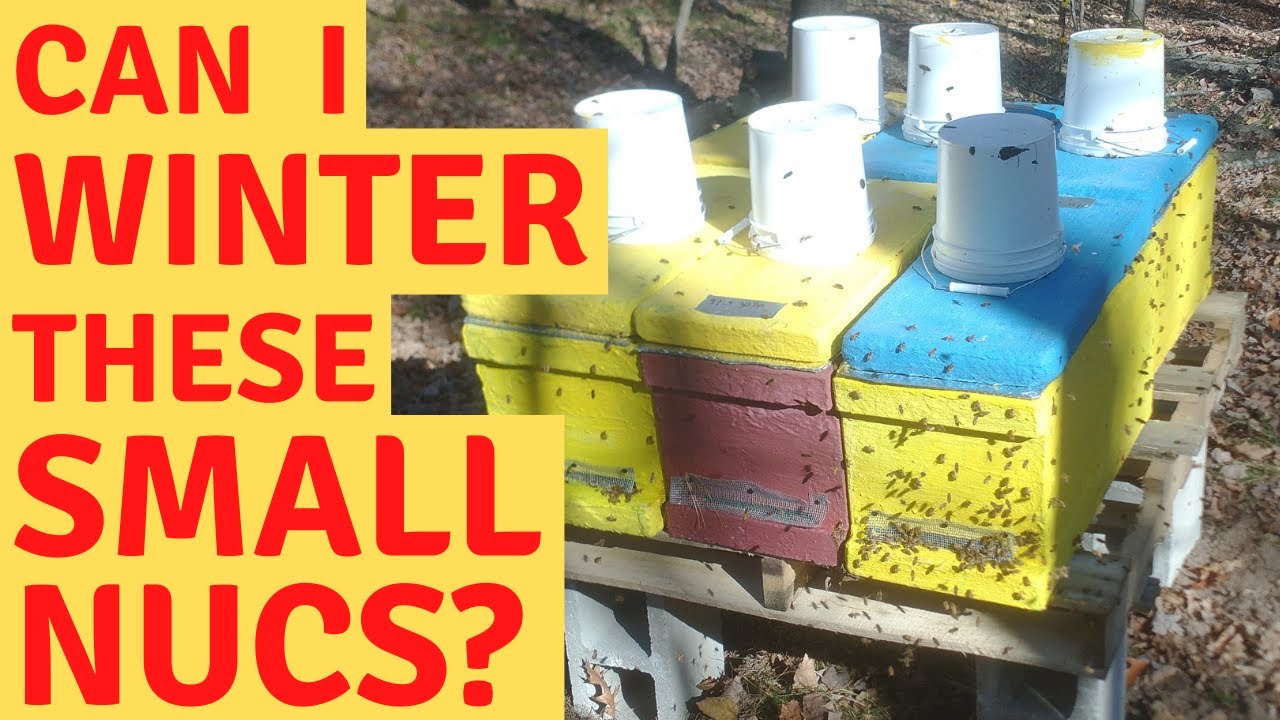
Wintering nucs in Zone 3 (Spirit, Wisconsin)
Автор: Honeydrop Farm
Загружено: 2021-11-07
Просмотров: 989
Описание:
1. Insulation reduces honey consumption in winter, which means:
-Lower risk of starvation,
-Lower risk of dysentery due to ash buildup in the gut,
-Less condensation, and
-Bigger honey harvests.
2. “Less condensation” is a two edged sword. Very large colonies can actually die of thirst in an insulated hive, as was demonstrated by Bernhard Möbus—partly because their size helps them stay warm without eating much honey, and partly because the walls of the hive may be too warm for condensation to form. Small colonies benefit most from insulation, because they manage to stay warm and have enough condensation to drink.
3. Eating honey produces moisture in 2 ways:
-The 15-20% moisture in the honey goes into the bee's body and is released in its breath,
-Part of each sugar molecule is converted into H2O when it is metabolized (and this is also released in the bee's breath) to the tune of an extra 3/4 cup of water per pound of honey!
4. Forty pounds of honey contain about 7 pounds of water to start with; but when those 40 pounds of honey get metabolized, they turn into a whopping 25 pounds of water; 15 pounds of carbon dioxide; and many, many BTUs!
5. Conventional wisdom about the bees only heating the cluster, not the hive, is only true in conventional wooden hives. It is true there only because every watt of heat radiates through the walls as soon as the bees produce it, meaning they have to eat and eat and eat just to stay warm. In insulated cavities, the bees heat the cavity. (For example, hollow trees and poly hives). In Etienne's hives, the entire cavity stays at or above 40 degrees F, even near the entrance, even when it's minus 40 outside. In other words, most of the hive is accessible to the bees throughout the entire winter. Which leads to an even lower risk of starvation (no honey left behind).
6. Insulated hives cost more than wooden ones, but they pay for themselves quickly (due to less mortality and a bigger honey harvest).
7. Conventional wisdom about bees needing upper ventilation to stay dry in winter, is only true in thin-roofed wooden hives. It is true there because the warm, moist air from the bees' breath rises straight up and encounters a very cold ceiling. The cold ceiling immediately cools that warm, moist air off to a temperature far below its dew point, forcing it to deposit its humidity directly onto the nearest surface, which is the ceiling directly above the bees—where it accumulates and drips down on them.
8. The conventional way to solve this problem is to release the moisture through an upper vent/upper entrance, wasting a huge number of BTUs. Etienne's way to solve this problem is to insulate the roof so much that it never gets colder than the dew point, and the condensation happens at the bottom of the hive, below the cluster. At 40 below, condensation is going to happen to matter what you do. Therefore, since Etienne can't stop it from happening, he does the next best thing, which is to CHOOSE THE LOCATION where it is going to happen. He does this by having all ventilation occur at the bottom of the hive, between the entrance and the screened bottom board, ensuring that the coldest part of the hive is below the bees.
9. If you have conventional wooden hives, consider putting at least one sheet of styrofoam (XPS or EPS) on top of your inner cover. If you can get the ceiling to stay warm, then the warm, moist air from the cluster will condense on the cold walls rather than the warm ceiling. Therefore, it won’t drip on your bees. If the ceiling is warm enough (insulated enough), then you can plug your upper entrance and stop all your warm air from escaping. So your bees will be cozier, and they will eat less honey—even if the only thing insulated is the roof. The roof is the place to start.
10. You may need more than one sheet of insulation on the roof of your wooden hives before you can get rid of your upper ventilation. It is not enough for the ceiling to be warmer than the walls—the ceiling must actually be warmer than the dew point of the bees’ breath. I think Etienne has 4 layers of 2’’ rigid foam on top of his hives!
11. Because warm air rises, a conventional hive loses 15-20% more heat through the ceiling than through the walls. Another reason to insulate the top more than the sides.
------------
YouTube only gives me so much space for the video description, but there's a lot more to learn about insulated hives. I've condensed it all on my blog right here: https://www.honeydropfarm.com/blog/sh...
Etienne Tardif's YouTube channel: / @etiennetardif
Bernhard Möbus's articles: https://polyhive.info/recourses/mobus...
Повторяем попытку...
Доступные форматы для скачивания:
Скачать видео
-
Информация по загрузке: