BARTOK - Romanian Folk Dances | Facundo Agudin - Musique des Lumières
Автор: Musique des Lumières
Загружено: 2025-10-22
Просмотров: 273
Описание:
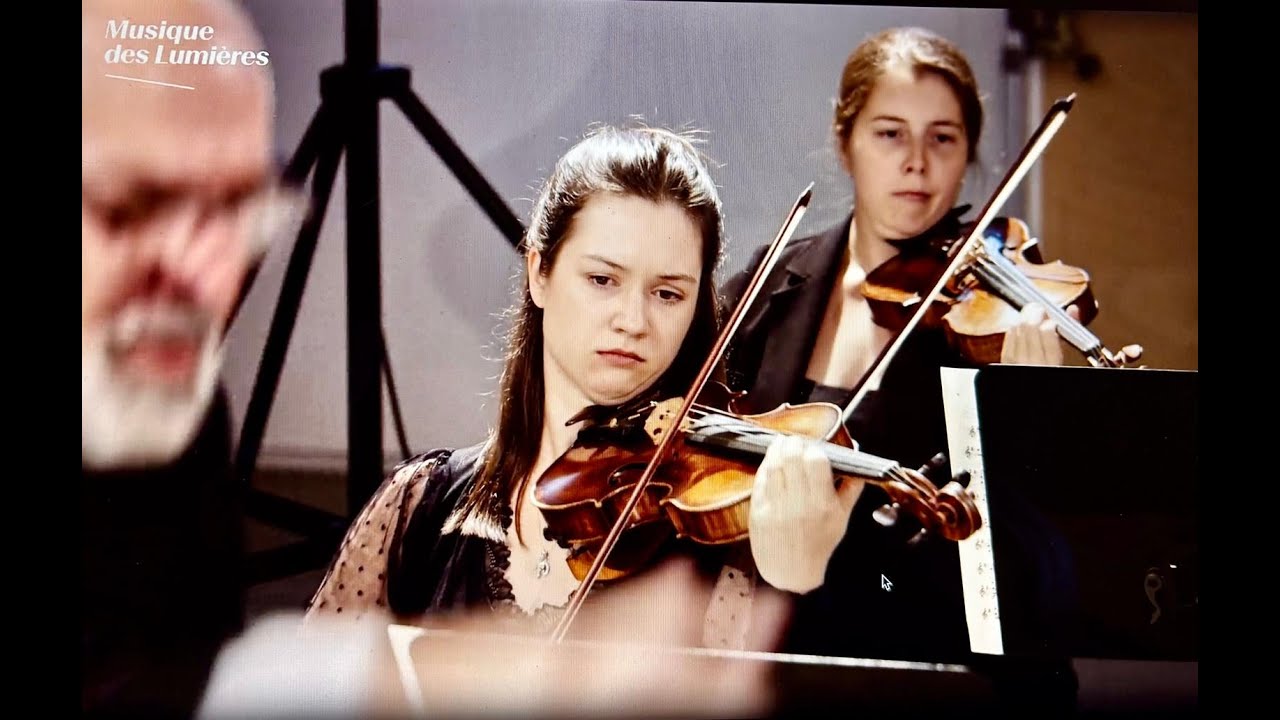
BELA BARTOK Romanian Folk Dances Sz. 68, BB 76 (1915-17)
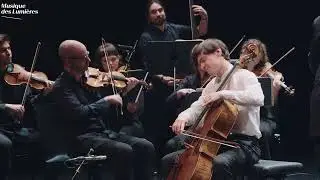
Orchestre Musique des Lumières
Marija Strapcane, concertmaster
Facundo Agudin, music director
—
21.09.25 - Recorded live at Espace La Velle, Le Noirmont, Switzerland
Musique des Lumières & Festival du Jura
Audio / video: Filip Saffray
—
Béla Bartók’s Romanian Folk Dances: Ethnography and Modernism
Composed in 1915 and orchestrated in 1917, Béla Bartók’s Romanian Folk Dances exemplify the composer’s synthesis of ethnomusicological authenticity and modernist compositional technique. Derived from melodies Bartók collected in Transylvania between 1909 and 1913, the six movements—originally for piano—present a sequence of genuine peasant tunes transcribed from village violinists and flute players.
Bartók’s treatment of these melodies reflects his commitment to preserving their modal, rhythmic, and ornamental characteristics within an art music context. The dances employ modes such as Dorian and Aeolian, frequent asymmetric meters, and irregular rhythmic groupings, mirroring the fluidity of oral folk performance. Rather than harmonizing conventionally, Bartók frames the melodies with sparse, drone-like or quartal harmonies that evoke rustic timbres while subtly projecting a modernist harmonic vocabulary.
The orchestral version intensifies the idiomatic color of the source material through transparent instrumentation, suggesting the sonority of traditional instruments like the fiddle and tulnic. As both ethnographic document and concert work, Romanian Folk Dances crystallize Bartók’s vision of a “new nationalism” rooted in empirical fieldwork rather than romantic idealization. The suite remains a concise testament to his belief that authentic folk material could renew and transform the language of twentieth-century music.
—
Esteban Buch on Agudin's work with Musique des Lumières
“The applied erudition and the transgression of institutional routines, which gave the historicist movement its aesthetic and social dynamism, have now become the indispensable foundation upon which contemporary experiments rest. Facundo Agudin is well aware of the demand for authenticity which, since the 1970s—under the banner of historicism and later the label of Historically Informed Performance—has profoundly renewed the sound of pre-classical music, even extending thereafter to the classical-romantic and, in some cases, twentieth-century repertoire. It is this modern approach to musical practice that the orchestra Musique des Lumières and Agudin embody today, when they assert their commitment to transversality.”
Esteban Buch, EHESS Paris
—
Orchestre Musique des Lumières
Violin I - Marija Strapcane (concertmaster), Laurentiu Stoian, Laia Azcona, Mariia Ten, Sibil Veress, Melissa Chen, Elizaveta Yarovaya
Violin II - Séverine Cozette, Charlotte Mercier, Mia Renfer, Ciprian Musceleanu, Iulia Smeu, Irina Kirichek
Viola - Shelley Soerensen, Evgenii Franchuk, Nina Mayer, Thomas Aubry
Cello - Alma Hernám, Kirill Fasla, Nadzeya Kurzava
Bass - Romana Uhliková, Tashko Tachev
Flute - Claire Garde
Oboe - Nathalie Gullung, Christelle Lecointe
Clarinet - Mariella Bachmann, Antoine Joly
Bassoon - Lili Szutor, Nicolas Michel
Horn - Veselin Manchev, Aurélien Tschopp
—
Musique des Lumières & Facundo Agudin: https://www.musiquedeslumieres.com/
Filip Saffray - video production: https://filipmichalsaffray.com/
Повторяем попытку...
Доступные форматы для скачивания:
Скачать видео
-
Информация по загрузке:

![[CONCERT] Pépin/Dutilleux/Franck - Orchestre National de Lille - J.Weilerstein - V.Julien-Laferrière](https://image.4k-video.ru/id-video/u-8lsHACH18)