The Social Self - Lesson 2: Self-Awareness and Self-Consciousness
Автор: Psychology elearning
Загружено: 2026-02-24
Просмотров: 4
Описание:
Ever walked into a quiet room and suddenly felt every emotion amplified? Or eaten alone in a food court and felt like everyone was staring? 🫣
That’s Self-Awareness. And it’s one of the most powerful—and uncomfortable—forces in your mind.
In this video, we explore the psychology of the internal spotlight. We break down the classic research from Duval & Wicklund, Carver & Scheier, and others to answer questions like:
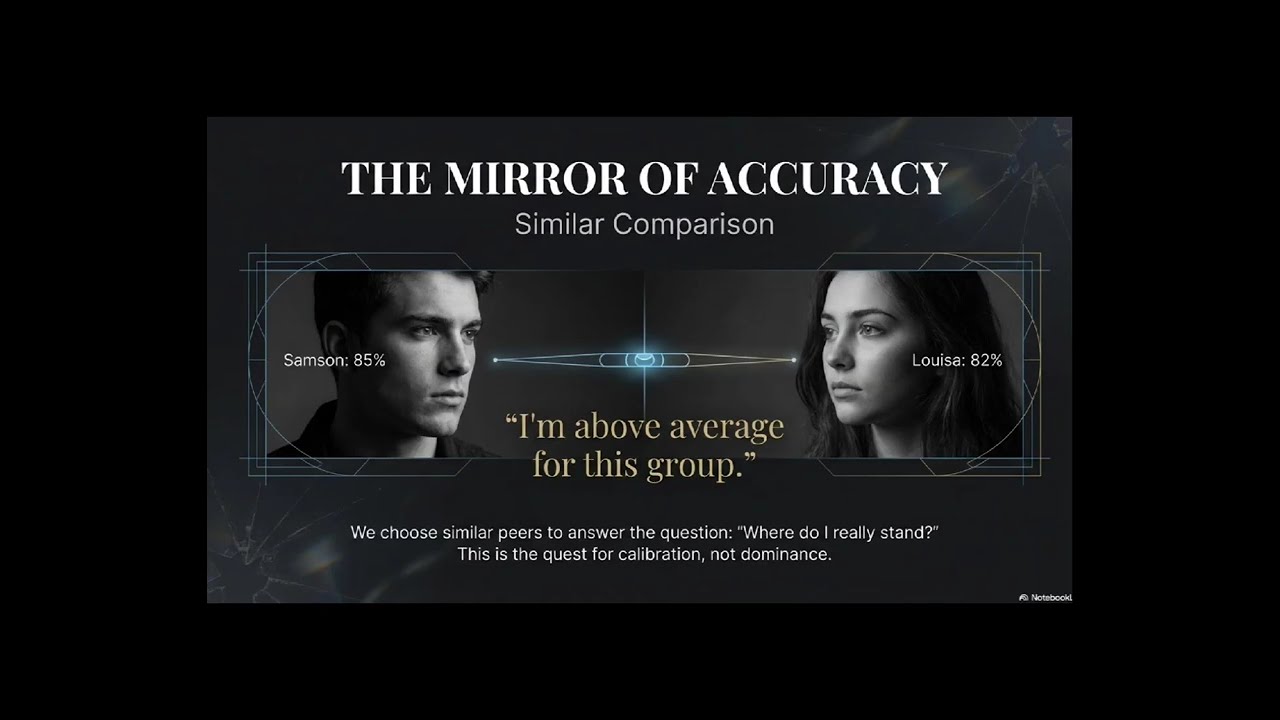
· Why does looking in a mirror make your emotions stronger?
· Why do you act differently when you’re being watched?
· And why do some people seem to live their whole lives with that spotlight stuck on "full beam"? 🔦
What you’ll learn in this video:
🧠 Part 1: What is Self-Awareness?
The camera vs. the screen metaphor—and why comparing yourself to your own standards usually ends in discomfort.
🔦 Part 2: Two Flavors of the Spotlight
· Private Self-Awareness: Focusing on your inner thoughts and feelings.
· Public Self-Awareness: Focusing on how you appear to others.
📈 Part 3: Consequences of Private Self-Awareness
· Amplifying Emotions: Why a quiet train can make a bad text feel 10x worse (Scheier & Carver, 1977).
· Sticking to Your Values: How a mirror can stop you from cheating or buying that sugary frappe (Diener & Wallbom, 1976).
🌍 Part 4: Consequences of Public Self-Awareness
· The Negative: Eating alone in public and the agony of "evaluation apprehension."
· The Positive: Why you don’t cut in line—and how self-awareness keeps society running.
🍷 Part 5: The Escape Hatch
Why we drink, scroll, and distract ourselves to avoid the glare.
🧬 Part 6: State vs. Trait (Self-Awareness vs. Self-Consciousness)
· High Private Self-Consciousness: The introspective journalist (good for authenticity, risky for rumination).
· High Public Self-Consciousness: The social media curator (good for image management, risky for anxiety).
👶 Part 7: The Rouge Test
Where does "self" begin? The magical moment a toddler realizes the dot in the mirror is on their nose (Lewis & Brooks-Gunn, 1978).
💡 Part 8: The Takeaway
How to use the spotlight—and when to turn it off.
⏱️ Timestamps:
The Silence Experiment
What is Self-Awareness? (The Spotlight)
Private vs. Public Self-Awareness
Amplifying Emotions (The Train Example)
Sticking to Values (The Coffee Shop & The Mirror Study)
Public Self-Awareness (Eating Alone & Waiting in Line)
The Uncomfortable Truth (Why We Distract Ourselves)
STATE vs. TRAIT: Self-Awareness vs. Self-Consciousness
The Rouge Test (Where It All Begins)
The Takeaway: How to Handle Your Spotlight
🔗 References & Further Reading:
· Duval & Wicklund (1972) - A theory of objective self-awareness
· Scheier & Carver (1977) - Self-focused attention and the experience of emotion
· Diener & Wallbom (1976) - Effects of self-awareness on cheating
· Mor & Winquist (2002) - Self-focused attention and negative affect
· Lewis & Brooks-Gunn (1978) - The Rouge Test and self-recognition
💬 Join the Conversation:
When was the last time you felt super self-aware? Was it helpful or horrible? Let me know in the comments! 👇
If this video gave you a new way to think about yourself, please LIKE and SUBSCRIBE for more deep dives into the psychology of everyday life. 🔔
#psychology #selfawareness #selfconsciousness #mentalhealth #mindset #cognitivepsychology #theself #personality #selfimprovement #mirrortest
Повторяем попытку...

Доступные форматы для скачивания:
Скачать видео
-
Информация по загрузке: