Neuropharmacology: The Cellular Basis of Communication I (Nestler, Hyman, & Malenka, 2009, Ch 2)
Автор: NourishED Research Foundation
Загружено: 2026-02-14
Просмотров: 7
Описание:
I. Overview Of Neuronal Communication
The brain contains at least 100 billion neurons.
Neurons are the principal cells that process information.
Complexity arises from cellular diversity and circuits.
Communication depends on electrical and chemical carriers.
Chemical signals occur at synapses between neurons.
Electrical mechanisms control ion flow across membranes.
Neurons constantly adapt to the changing environment.
II. Structure Of The Neuron
Neurons are polarized cells with three major components.
The cell body contains the nucleus and organelles.
The soma synthesizes proteins for the neuron.
Dendrites receive synaptic contacts from other neurons.
Dendritic spines isolate specific synaptic inputs.
The axon conducts electrical impulses to terminals.
The cytoskeleton provides an inner scaffold for structure.
Microtubules transport proteins via kinesin and dynein.
III. The Synapse And Transmission
Synapses are specialized units for transmitting information.
They consist of presynaptic and postsynaptic elements.
Neurotransmitters release into the synaptic cleft.
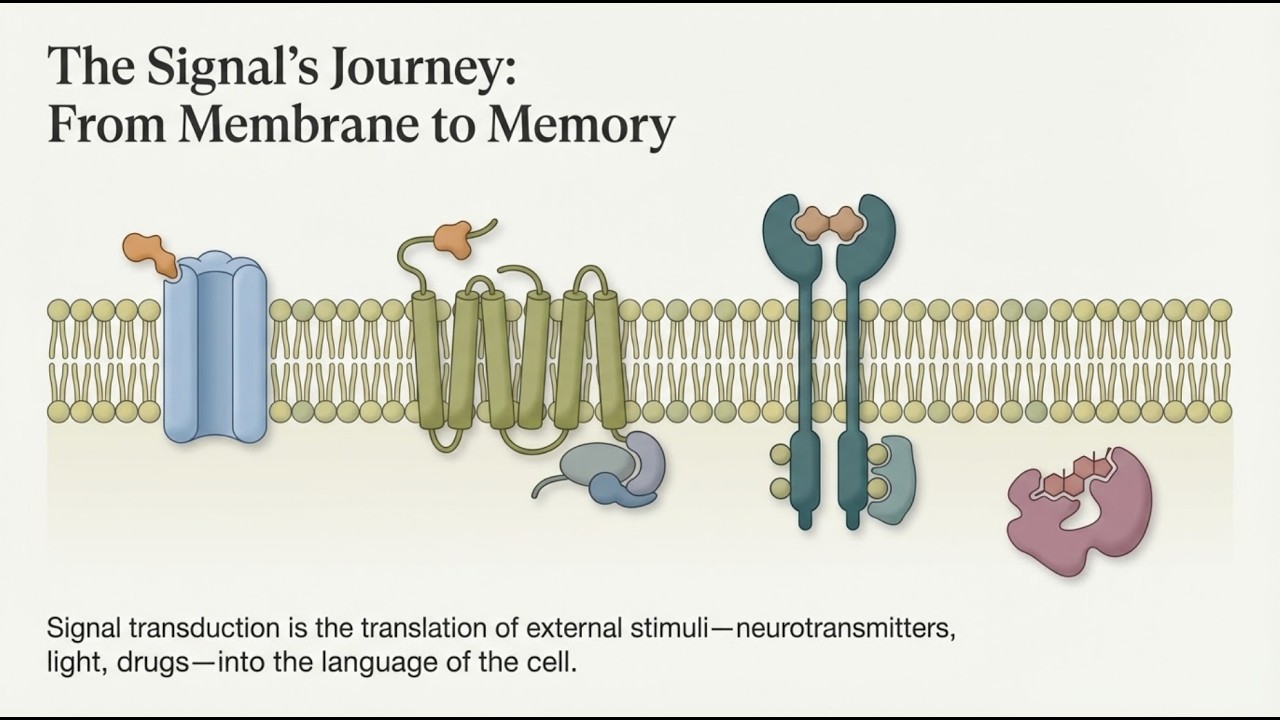
Transmitters bind to specific receptors on the next neuron.
Binding precipitates electrical changes in the target cell.
Most brain synapses utilize chemical transmission.
Gap junctions allow direct electrical flow between cells.
Synapses are tightly bound by cell adhesion molecules.
IV. Electrical Properties Of Neurons
Neurons maintain a negative electrical potential.
Potential relies on unequal ion distribution.
The cell membrane is selectively permeable to ions.
Na+/K+ pumps maintain ionic gradients using energy.
Pumps move three Na+ out and two K+ in.
Depolarization makes the potential less negative.
Action potentials are rapid, all-or-none depolarizations.
Myelin sheaths facilitate rapid impulse conduction.
V. Ion Channels And Signaling
Ion channels have an aqueous pore for permeation.
Voltage-gated channels open when the membrane depolarizes.
Na+ channels are targets for local anesthetics.
K+ channels stabilize potential and repolarize cells.
Ca2+ channels trigger neurotransmitter release.
TRP channels are involved in sensory perception.
Chloride channels dampen electrical excitability.
Mutations in channels cause disorders called channelopathies.
VI. Glial Cells
Astrocytes maintain the extracellular milieu.
They help form the blood-brain barrier.
Oligodendrocytes produce myelin sheaths in the CNS.
Schwann cells myelinate axons in the peripheral system.
Microglia defend against infectious diseases.
Astrocytes can influence synaptic transmission.
Glia guide neuronal migration during development.
VII. The Blood-Brain Barrier
This barrier creates an isolated homeostatic milieu.
It is formed by tight junctions between endothelial cells.
It restricts the passage of soluble molecules.
Only small lipophilic substances enter easily.
Hydrophilic molecules require specific transport pumps.
Astrocytes induce endothelial cells to form the barrier.
P-glycoproteins pump drugs out of the CNS.
VIII. Additional Resource Support
See NourishED RFI's NotebookLM Resource Support Page.
https://notebooklm.google.com/noteboo...
IX. Source
Nestler, E. J., Hyman, S. E., & Malenka, R. C. (2009). Chapter 2: Cellular Basis of Communicatoin. In Molecular Neuropharmacology: A foundation for clinical neuroscience (2nd ed.). McGraw-Hill.
#neuropharmacology #neuroscience #cellularbiology #neurons #synapse #ionchannels #medicaleducation #medschool #psychiatry #neurobiology #psychopharmacology @NIMHgov @NIHgov @NIHVideoCast @Psychopharmacologyinstitute @SpeedPharmacology @AM_Fouda @just_pharmacology @neurochallenged
Повторяем попытку...

Доступные форматы для скачивания:
Скачать видео
-
Информация по загрузке: