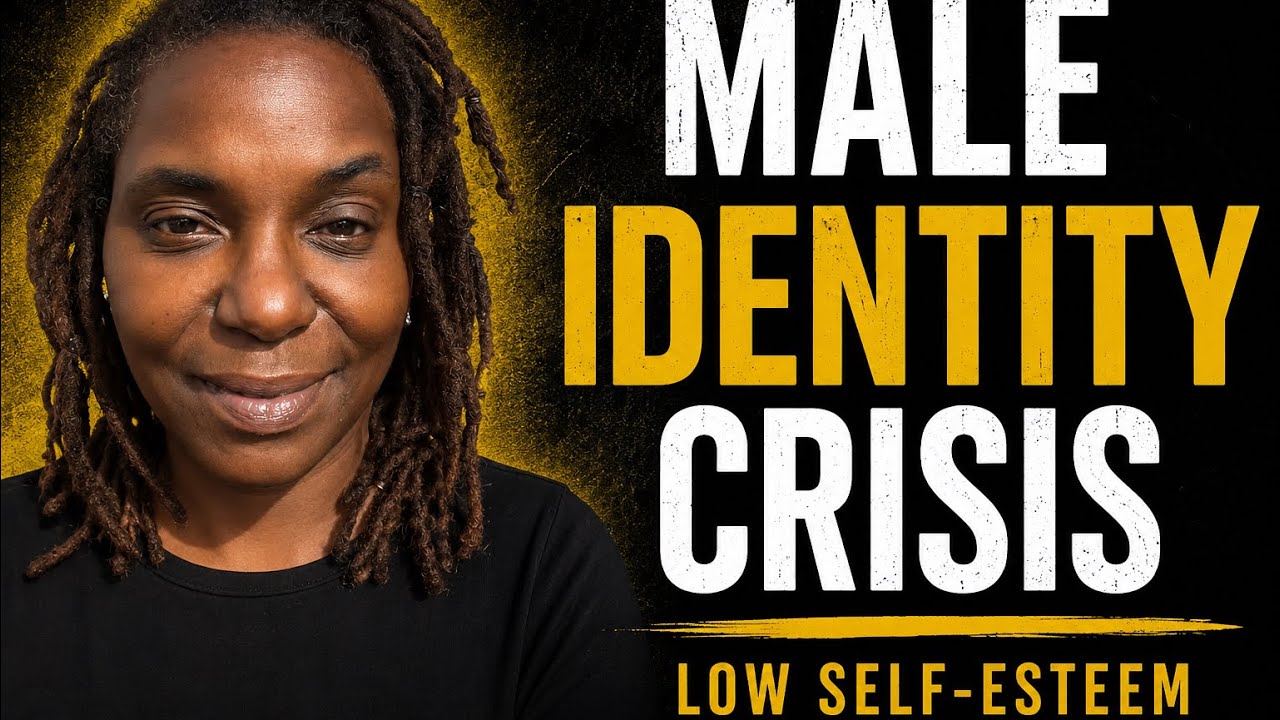
Does Providing Mean Low Self Esteem - Male Identity Crisis
Автор: Lady Litty Boots
Загружено: 2026-05-16
Просмотров: 24
Описание:
Help me inner stand over stand something.
For generations, men provided,
protected,
built infrastructure,
controlled resources,
organized labor,
led institutions,
and occupied positions of structural authority within society.
Culture associated those functions with:
masculinity,
strength,
responsibility,
leadership,
discipline,
and provision.
Then social media suddenly turns around and says:
“Men who pay all the bills have low self-esteem.”
Focus.
Because that contradiction is sitting right in everybody’s face.
The exact same behavior once praised as masculine responsibility now gets reframed as insecurity.
So what changed?
Because provision itself is not weakness.
Protection is not weakness.
Responsibility is not weakness.
Contribution is not weakness.
The deeper issue is what gets attached to those functions psychologically and socially.
And this is where the conversation starts collapsing.
Because function is one thing.
Dominance is another.
Leadership is one thing.
Control is another.
Provision is one thing.
Using provision to establish superiority,
ownership,
ego,
or authority over another human being is something entirely different.
That distinction matters.
A society requires structure.
A society requires contribution.
A society requires responsibility.
A society requires cooperation.
A society requires protection of vulnerable people.
A society requires participation.
So the issue was never:
men providing.
The issue becomes:
how dominance psychology attaches identity,
worth,
authority,
status,
and superiority onto human function.
That is where instability enters.
Because once identity gets organized around performance,
people start collapsing internally every time the performance script shifts socially.
And this is why so many conversations around masculinity feel emotionally charged now.
Because many men were socially conditioned to organize their sense of worth around usefulness.
If I provide, I matter.
If I protect, I matter.
If I succeed financially, I matter.
If I lead, I matter.
Then suddenly culture starts questioning the very roles men were taught to build identity around.
So now many men feel psychologically disoriented.
Not because provision itself is harmful.
Because identity attached itself too heavily to external performance.
And social media intensifies that instability.
One side says:
“A real man pays all the bills.”
Another side says:
“If he pays all the bills he must feel insecure.”
One side says:
“Men must lead.”
Another side says:
“Leadership is toxic.”
One side says:
“Women want providers.”
Another side says:
“Women want equality.”
So now people are reacting emotionally to collapsing scripts without fully understanding the larger transition happening socially.
And instead of slowing down to examine the instability carefully, people start choosing sides emotionally.
That is where the conversation becomes even more important.
Because contribution and control are two different things.
Cooperation and leverage are two different things.
A person contributing financially inside a relationship is not automatically controlling someone.
A person helping stabilize a household is not automatically insecure.
A person providing resources is not automatically operating from superiority.
Yet dominance culture trains people to collapse contribution into power.
So now everything becomes transactional.
Who pays more?
Who owes more?
Who has more authority?
Who has more leverage?
Who needs who more?
Who has the upper hand?
That is not partnership.
That is positional thinking.
And once relationships become organized around leverage, people stop relating to each other humanly.
Now relationships become negotiations of power instead of spaces of cooperation.
That creates emotional exhaustion for everybody involved.
Because now men start wondering:
“If I provide, am I being used?”
Women start wondering:
“If he provides, will he try to control me?”
Men start questioning:
“Am I respected without money?”
Women start questioning:
“Am I valued outside appearance, sex, labor, or emotional support?”
Now everybody is scanning for exploitation.
Everybody is guarding themselves.
Everybody is trying to avoid becoming vulnerable inside unstable structures.
And social media intensifies this constantly.
Because internet discourse rewards emotional extremity.
The most reactive take spreads fastest.
The most divisive framing spreads fastest.
The most emotionally charged language spreads fastest.
Nuance moves slowly.
Reflection moves slowly.
Careful examination moves slowly.
Yet outrage,
conflict,
gender warfare,
humiliation,
and emotional absolutism generate engagement immediately.
So now millions of people are building their understanding of relationships through algorithmic conflict loops.
Because the internet starts reshaping perception psychologically.
Now people begin interpreting ordinary human interdependence as weakness.
Повторяем попытку...
Доступные форматы для скачивания:
Скачать видео
-
Информация по загрузке: