Security vs. Sustainability: The Hidden Costs of a Geopolitical Race for Minerals
Автор: Paris Peace Forum
Загружено: 2025-10-30
Просмотров: 170
Описание:
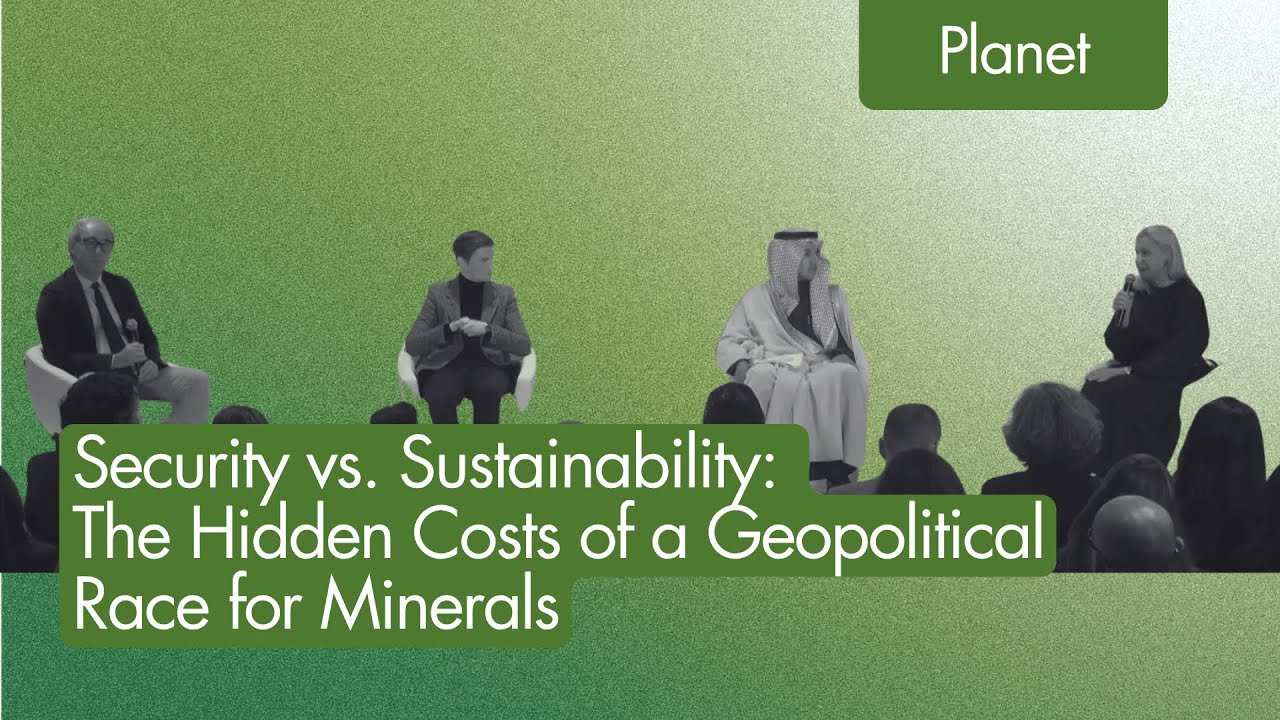
The global agenda, increasingly dominated by the imperatives of climate action and digital transformation, is placing unprecedented strategic importance on critical minerals. Organized as part of the transition minerals initiative of the Paris Peace Forum, the panel convened to dissect the escalating tension between competition and cooperation within this sector. What emerged was a nuanced, often paradoxical, landscape: a clear and urgent need for enhanced collaboration juxtaposed with a palpable resurgence of resource nationalism, fragmented value chains, and the complex interplay of economic ambition, environmental stewardship, and geopolitical rivalry.
The discussion opened with a stark assessment from the moderator Karim Dahou of the OECD, highlighting a fivefold increase in export restrictions across critical mineral sectors over the past decade. This trend signifies a palpable rise in "resource nationalism," a phenomenon not entirely new, citing China's restrictions on rare earth exports to Japan in the early 2010s. Such restrictions affecting materials crucial for clean energy, digital industries, and defense directly contribute to fragmented value chains, raising concerns about cost escalation and potential delays in achieving global net-zero objectives. While initiatives like the Mineral Security Partnership (MSP) were conceived to foster cooperation between consumer and producer nations, progress has been notably slow.
Amidst this backdrop, both established and emerging mineral-rich nations are charting ambitious courses to secure their positions. Ana Brnabić, President of the National Assembly of Serbia, revealed the country’s substantial lithium reserves, estimated to meet up to 90% of current EU demand, and emphasized a strategic partnership with the EU. This collaboration aims not merely at extraction, but at integrating Serbian lithium into European sustainability and competitiveness frameworks.
Concurrently, Saudi Arabia, as articulated by the Deputy Minister of Mining Development Turki Al-Babtain, is undergoing a profound transformation. Under Vision 2030, the Kingdom aims to elevate its mining sector to the third pillar of its national economy, shifting from mere resource extraction to value creation and global resilience.
The panelists further elucidated the intertwined challenges of establishing local value chains and addressing the environmental footprint of mining. Both Brnabić and Al-Babtain underscored their nations' aspirations to process raw materials domestically, retaining added value and fostering industrialization. Ana Brnabić specifically argued that domestic production could reduce Europe's dependence. Kadri Simson, former European Commissioner for Energy and member of the Global Council for Responsible Transition Minerals - a high-level independent effort launched by the Paris Peace Forum to advocate for a global collaborative approach to mineral resources management, offered a sobering perspective on the EU's autonomy efforts, including the Critical Raw Materials Act. While acknowledging targets for domestic extraction, processing, and recycling, she conceded that these measures alone would not achieve full autonomy and necessitate continuous "follow-up actions." She starkly stated that as with the lesson from Russia’s weaponization of gas supply, "dependency equals vulnerability", which is evident today in the battery sector, with the EU’s 90% reliance on a single supplier, China. Simson championed recycling as a vital component, though recognizing its limitations, and stressed the importance of diversified partnerships, not just for supply security but also for promoting high environmental and social standards globally.
In summation, the dialogue revealed that securing critical mineral supply chains is less about simplistic competition or cooperation and more about navigating a multifaceted global transition. The strategic imperative is to forge diverse, transparent, and equitable partnerships that prioritize shared value creation, advanced technological integration, and stringent environmental and social governance.
Follow us on social media
• 𝗧𝘄𝗶𝘁𝘁𝗲𝗿 - / parispeaceforum
• 𝗟𝗶𝗻𝗸𝗲𝗱𝗜𝗻 - / parispeaceforum
• 𝗙𝗮𝗰𝗲𝗯𝗼𝗼𝗸 - / parispeaceforum
• 𝗜𝗻𝘀𝘁𝗮𝗴𝗿𝗮𝗺 - / parispeaceforum
• 𝗧𝗶𝗸𝗧𝗼𝗸 - / parispeaceforum_
Повторяем попытку...
Доступные форматы для скачивания:
Скачать видео
-
Информация по загрузке: