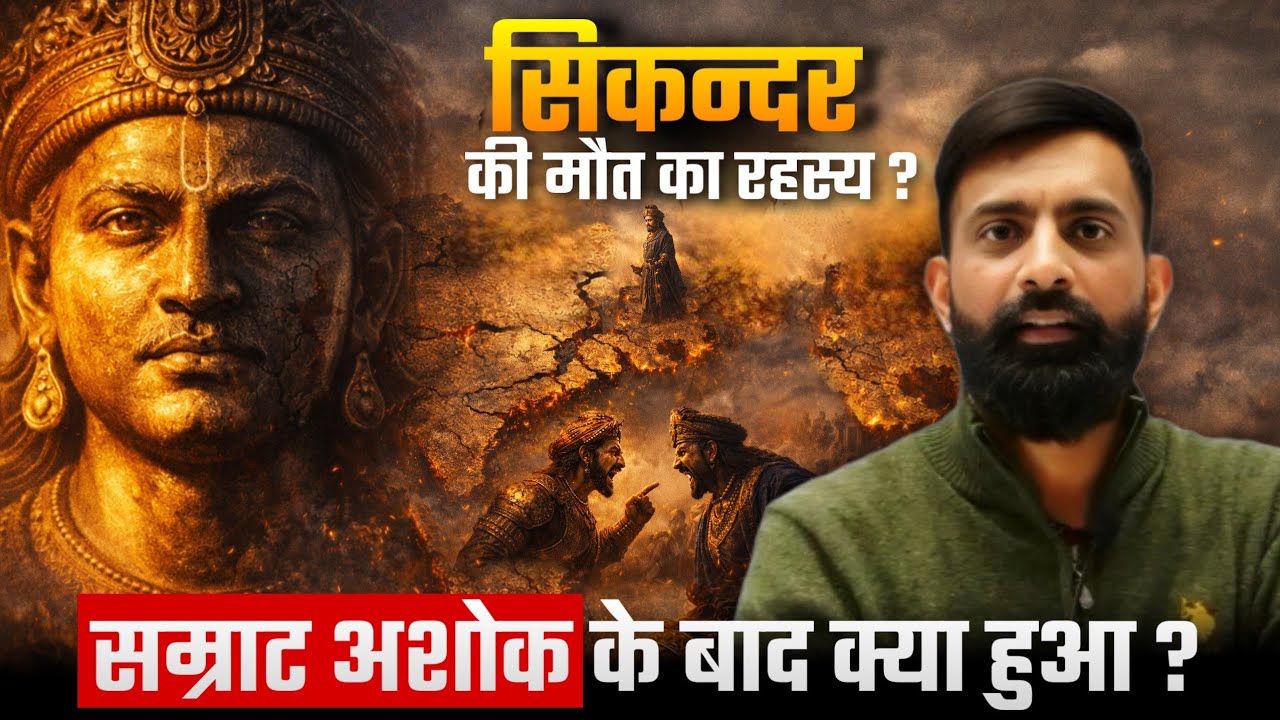
सम्राट अशोक के बाद का भारत | पुष्यमित्र शुंग का खौफ | सिकंदर की मौत का रहस्य, Rajveer sir
Автор: The Royal Blueprint
Загружено: 2026-02-16
Просмотров: 6032
Описание:
in this video we talk about:-
The Edicts of Ashoka state that during his eighth regnal year (c. 260 BCE), he conquered Kalinga after a brutal war. Ashoka subsequently devoted himself to the propagation of "dhamma" or righteous conduct, the major theme of the edicts. Ashoka's edicts suggest that a few years after the Kalinga War, he was gradually drawn towards Buddhism. The Buddhist legends credit Ashoka with establishing a large number of stupas, patronising the Third Buddhist council, supporting Buddhist missionaries, and making generous donations to the sangha.
Alexander the Great (Alexander III of Macedon) was an ancient Greek king and military commander (356–323 BC) who created one of history's largest empires by age 32. Born in Pella to Philip II and Olympias, he conquered the Persian Empire, Egypt, and parts of India. He died in Babylon in 323 BC, likely from disease, having mared Roxana.
Pushyamitra Shununga also known as Pushpamitra Shunga (IAST: Puṣpamitra Śuṅga) was the founder and the first ruler of the Shunga Empire which he established to succeed the Maurya Empire.Pushyamitra is recorded to have performed the Ashvamedha ritual to legitimize his right to rule.[2] Inscriptions of the Shungas have been found as far as the Ayodhya (the Dhanadeva–Ayodhya inscription), and the Divyavadana mentions that his empire stretched as far as Sakala (now Sialkot) in Punjab region, now in Pakistan.
key points:-
Samrat Ashok
chandragupt Maurya
Alexander
pushyamitra shunga
indian morden history
Indian ancient history
Rajveer Sir indian history
Rajveer Sir history
Повторяем попытку...
Доступные форматы для скачивания:
Скачать видео
-
Информация по загрузке: