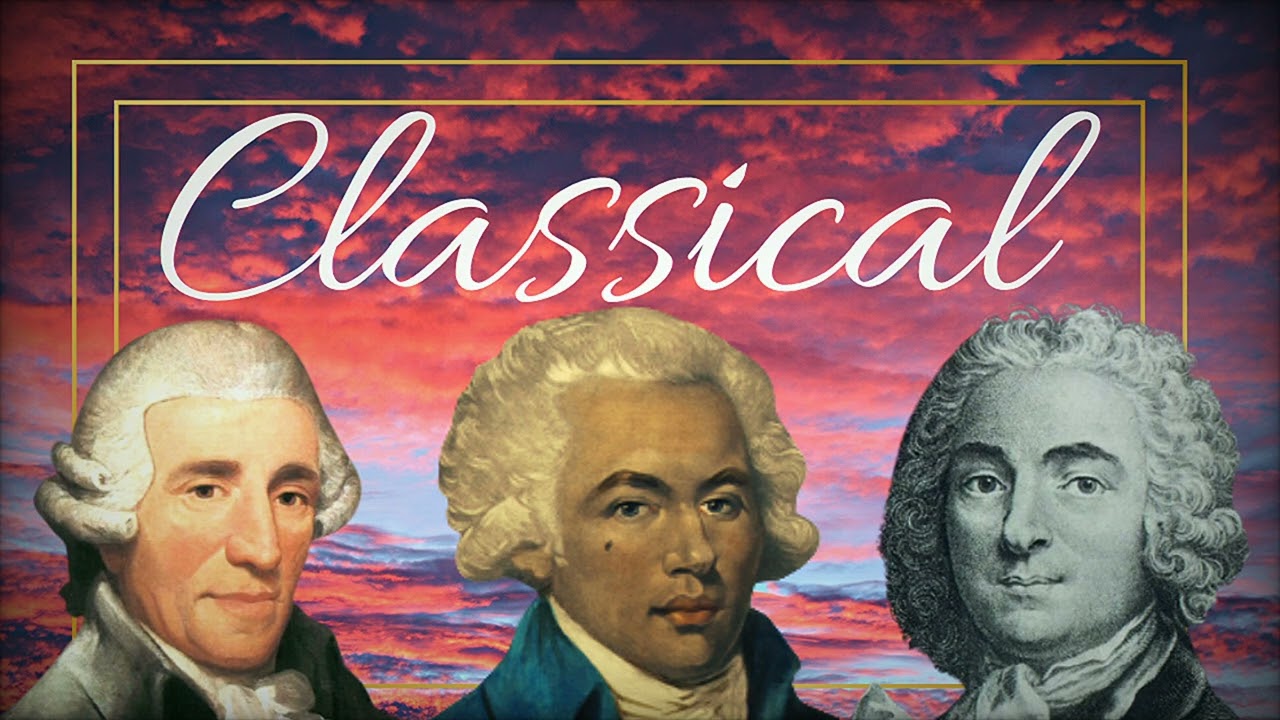
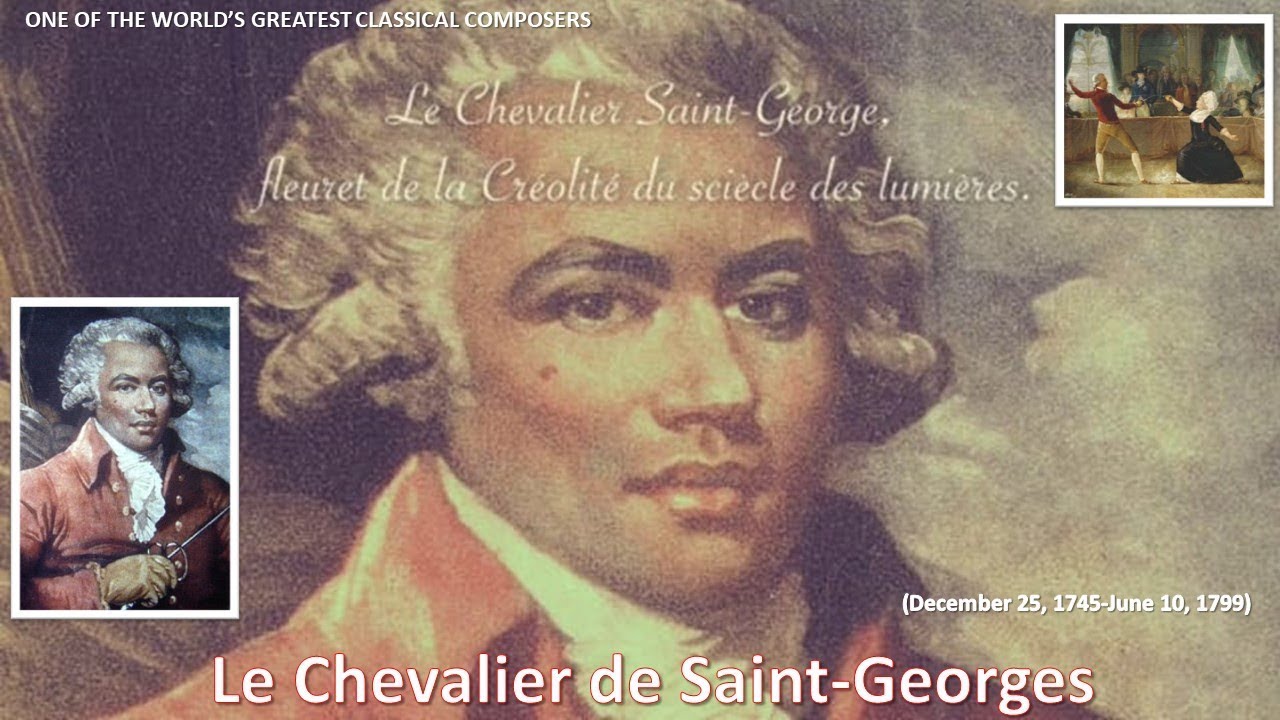
Le Chevalier de Saint-Georges, One of the world's greatest classical music composers
Автор: Electrifying Mojo Rare Moments
Загружено: 2018-11-12
Просмотров: 2528
Описание:
Joseph Bologne, Chevalier de Saint-Georges (December 25, 1745 – June 10, 1799)[1] was a champion fencer, classical composer, virtuoso violinist, and conductor of the leading symphony orchestra in Paris. Born in Guadeloupe, he was the son of George Bologne de Saint-Georges, a wealthy planter, and Nanon, his African slave.[2] During the French Revolution, Saint-Georges was colonel of the Légion St.-Georges,[3] the first all-black regiment in Europe, fighting on the side of the Republic.
Born in Baillif, Basse-Terre, Joseph Bologne was the son of George Bologne de Saint-Georges (a wealthy planter on the island of Guadeloupe) and Nanon, his African slave.[4] His father, called "de Saint-Georges" after one of his plantations in Guadeloupe, was a commoner until 1757, when he acquired the title of Gentilhomme ordinaire de la chambre du roi (Gentleman of the king’s chamber).[
Detail from Passenger list of Le Bien- Aimé showing St. Georges and his son, "mulatto" J'h (Joseph) landing in France on August 7, 1753
In 1753, his father took Joseph, aged seven, to France for his education.
Joseph was 13 when he was enrolled in Tessier de La Boëssière’s Académie royale polytechnique des armes et de ‘l’équitation (fencing and horsemanship). According to La Boëssière fils, son of the Master: “At 15 his [Saint-Georges’] progress was so rapid, that he was already beating the best swordsmen, and at 17 he developed the greatest speed imaginable.”[9] He was still a student when he beat Alexandre Picard, a fencing-master in Rouen, who had been mocking him as "Boëssière's mulatto", in public. That match, bet on heavily by a public divided into partisans and opponents of slavery, was an important coup for the latter. His father, proud of his feat, rewarded Joseph with a handsome horse and buggy.[10] In 1766 on graduating from the Academy, Joseph was made a Gendarme du roi (officer of the king’s bodyguard) and a chevalier.[11] Henceforth Joseph Bologne, by adopting the suffix of his father, would be known as the "Chevalier de Saint-Georges".
Music
François-Joseph Gossec
Nothing is known about Saint-Georges’s early musical training. "Platon", a fictional whip-toting slave commander on Saint-Domingue who, in Beauvoir’s novel "taught little Saint-Georges" the violin, is a figment of the author’s imagination.[note 1] Given his prodigious technique as an adult, Saint-Georges must have practised the violin seriously as a child. Yet, not before 1764, when violinist Antonio Lolli composed two concertos, Op.2 for him,[15] and 1766, when François Gossec dedicated a set of six string trios, Op.9[16] to Saint Georges, was it revealed that the famous swordsman also played the violin. The dedications also suggest that Lolli polished his violin technique and Gossec was his composition teacher. There is no basis to the not always reliable François-Joseph Fétis’ claim that Saint-Georges studied violin with Jean-Marie Leclair, however similar traits in technique indicate Pierre Gaviniès as one of his mentors. Other composers who later dedicated works to Saint-Georges were Carl Stamitz in 1770,[17] and Avolio in 1778.[18]
In 1769, the Parisian public was amazed to see Saint-Georges, the great fencer, among the violins of Gossec’s new orchestra, Le Concert des Amateurs. Two years later he became its concertmaster, and in 1772 he created a sensation with his debut as a soloist, playing his first two violin concertos, Op. II, with Gossec conducting the orchestra. "These concertos were performed last winter at a concert of the Amateurs by the author himself, who received great applause as much for their performance as for their composition."[19] According to another source, "The celebrated Saint-Georges, mulatto fencer [and] violinist, created a sensation in Paris ... [when] two years later ... at the Concert Spirituel, he was appreciated not as much for his compositions as for his performances, enrapturing especially the feminine members of his audience."[20]
Young Saint-Georges in 1768 at age 22: note the three roses on his lapel, a Masonic symbol
Повторяем попытку...
Доступные форматы для скачивания:
Скачать видео
-
Информация по загрузке: