Prince's Palace of Monaco, Principality of Monaco, Europe
Автор: Pietro Pecco
Загружено: 2021-11-03
Просмотров: 147
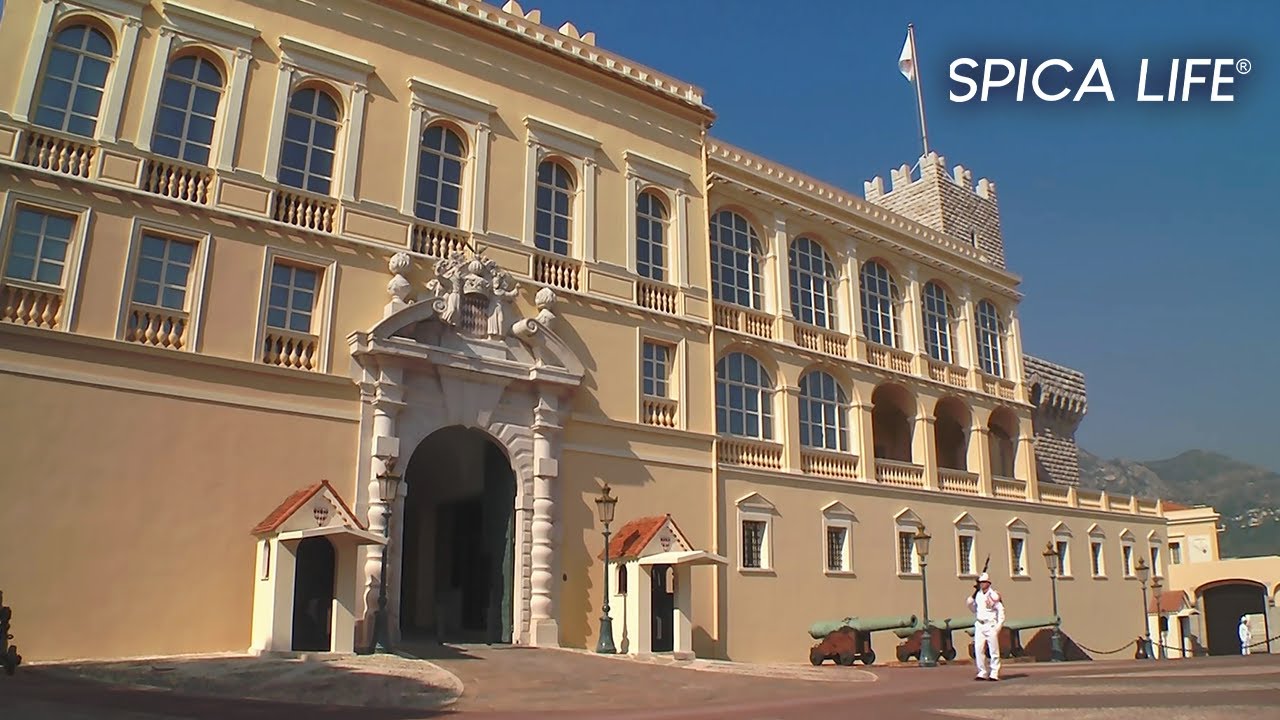
Описание: The Prince's Palace of Monaco is the official residence of the Prince of Monaco. Built in 1191 as a Genoese fortress, during its long and often dramatic history it has been bombarded and besieged by many foreign powers. Since the end of the 13th century, it has been the stronghold and home of the Grimaldi family who first captured it in 1297. The Grimaldi ruled the area first as feudal lords, and from the 17th century as sovereign princes, but their power was often derived from fragile agreements with their larger and stronger neighbours. Thus while other European sovereigns were building luxurious, modern Renaissance and Baroque palaces, politics and common sense demanded that the palace of the Monegasque rulers be fortified. This unique requirement, at such a late stage in history, has made the palace at Monaco one of the most unusual in Europe. Indeed, when its fortifications were finally relaxed during the late 18th century, it was seized by the French and stripped of its treasures, and fell into decline, while the Grimaldi were exiled for over 20 years. The Grimaldi's occupation of their palace is also unusual because, unlike other European ruling families, the absence of alternative palaces and land shortages have resulted in their use of the same residence for more than seven centuries. Thus, their fortunes and politics are directly reflected in the evolution of the palace. Whereas the Romanovs, Bourbons, and Habsburgs could, and frequently did, build completely new palaces, the most the Grimaldi could achieve when enjoying good fortune, or desirous of change, was to build a new tower or wing, or, as they did more frequently, rebuild an existing part of the palace. Thus, the Prince's Palace reflects the history not only of Monaco, but of the family which in 1997 celebrated 700 years of rule from the same palace. During the 19th and early 20th centuries, the palace and its owners became symbols of the slightly risqué glamour and decadence that were associated with Monte Carlo and the French Riviera. Glamour and theatricality became reality when the American film star Grace Kelly became chatelaine of the palace in 1956. In the 21st century, the palace remains the residence of the current Prince of Monaco. The palace is a blend of architectural styles; its ancient origins are indicated by a lack of symmetry. Thus to evaluate the architecture, wings and blocks have to be observed separately. The principal façade appears as a terrace of Renaissance style palazzi from differing periods of the Renaissance era (Illustrations 1 and 12) which even though they form only one palace is exactly what they are. These wings are however united by their common rusticated ground floor. This Renaissance architecture seems to mask earlier fortifications, the towers of which rise behind the differing classical façades. These towers many complete with crenellations and machicolations were actually mostly rebuilt during the 19th century. At the rear of the palace the original medieval fortifications seem untouched by time. (Illustration 4). A greater architectural harmony has been achieved within the court of honour around which the palace is built, where two tiers of frescoed open arcades serve as both a ceremonial balcony for the prince's appearances and a state entrance and corridor linking the formal state rooms of the palace. The most notable of the many rooms are the state apartments. These were laid out from the 16th century onwards, and were enhanced in the style of those at Versailles during the 18th century. In the 19th century and again during the late 20th century, large scale restoration of the state rooms consolidated the 18th century style which prevails today. Designed as an enfilade and a ceremonial route to the throne room, the processional route begins with an external horseshoe-shaped staircase which leads from the court of honour to the open gallery known as the Gallery of Hercules. From here guests enter the Mirror Gallery, a long hall inspired by the Hall of Mirrors at Versailles. This gallery leads to the first of the state rooms, the Officer's Room, where guests are greeted by court officials before an audience with the prince in the Throne Room. From the Officer's Hall the enfilade continues to the Blue Room. This large drawing room, decorated with blue brocade, is hung with Grimaldi family portraits and has chandeliers of Murano glass.
Повторяем попытку...

Доступные форматы для скачивания:
Скачать видео
-
Информация по загрузке:



![[4K] Монако 🇲🇨 Гавань Монте-Карло | Яхты миллиардеров и элегантность Французской Ривьеры](https://imager.clipsaver.ru/ljY4KUl3Arg/max.jpg)


![[4K] Монако 🇲🇨 Марина порта Геркулес, суперяхты и панорама Ривьеры](https://imager.clipsaver.ru/2dK7IKGJTWY/max.jpg)
![Monte Carlo, MONACO 4K Walking Tour - Captions & Immersive Sound [4K Ultra HD/60fps]](https://imager.clipsaver.ru/CAsklz0e0_Q/max.jpg)