Knife Fights - Debunking The LIES
Автор: Metatron
Загружено: 2024-11-15
Просмотров: 202448
Описание:
Join this channel to get access to more old school Metatron videos the algorithm wouldn't prioritize!
/ @metatronyt
Also if you like what I do and wish to support my work to help me make sure that I can continue to tell it how it is please consider checking out my patreon! Unboxings are Patreon exclusives!
/ themetatron
Link to the video I'm responding to
• Knife Expert: The Terrifying Truth About K...
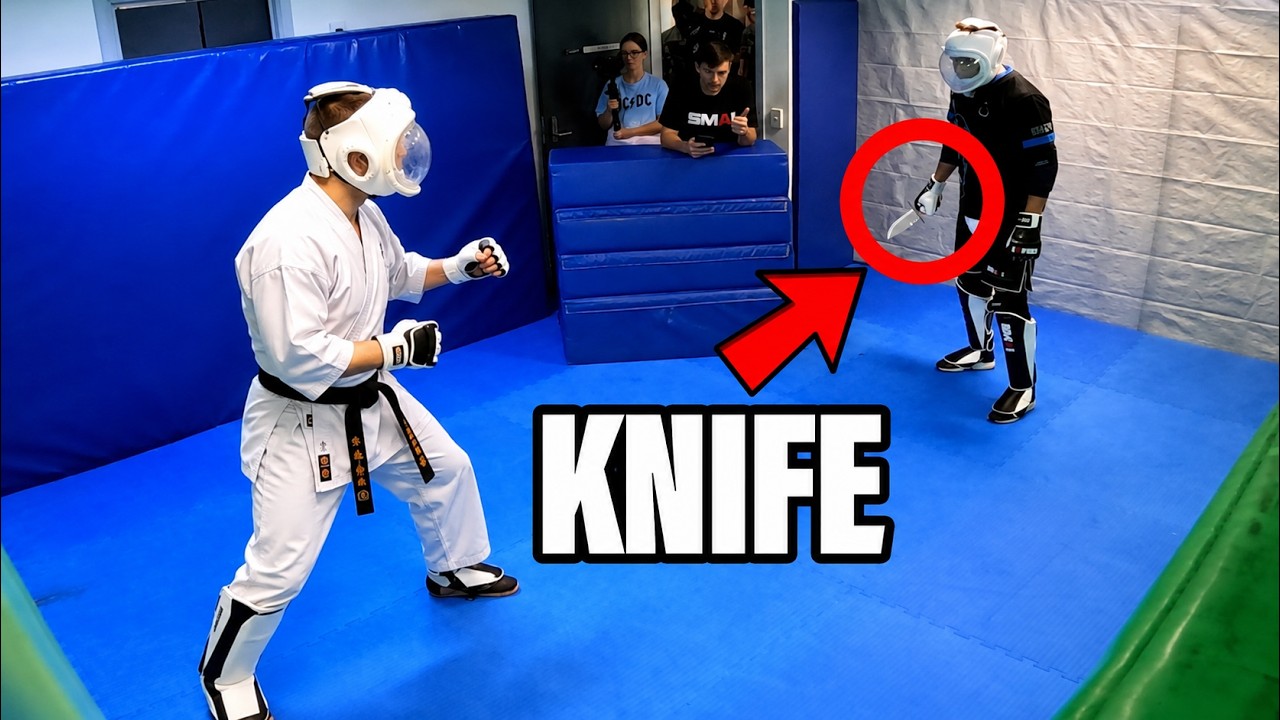
Knife fights represent one of the most lethal forms of close combat, with even trained martial artists and military personnel strongly advising against engaging in them. Unlike movie portrayals, real knife fights rarely involve skilled bladework - they're typically chaotic, brutally fast encounters where both participants often suffer severe injuries or death.
When someone is attacked with a knife, the defender frequently doesn't realize they've been stabbed until after the fact due to adrenaline. The human body can be mortally wounded with even a small blade - a single stab can sever major arteries, puncture vital organs, or cause fatal blood loss within minutes. Common knife wounds to the torso can damage the heart, lungs, liver, or other critical organs, while cuts to extremities can sever arteries leading to rapid exsanguination.
The best self-defense experts emphasize that there are no reliable ways to defend against a determined knife attack without getting cut. Even trained fighters typically sustain serious injuries when attempting to disarm an armed assailant. The saying "the loser of a knife fight dies in the street, the winner dies in the ambulance" reflects this grim reality.
Prevention and de-escalation are always the wisest choices when faced with potential knife violence. This means avoiding high-risk situations, being aware of your surroundings, recognizing warning signs of aggression, and using verbal de-escalation when possible. If threatened, creating distance and escaping should be the priority rather than engaging. No possession or point of pride is worth the potentially fatal consequences of a knife fight.
Property can be replaced, but lives cannot. The severe and often fatal nature of knife wounds means that avoiding confrontation entirely is often a reliable way to prevent tragedy. Whether through situational awareness, conflict de-escalation, or simply leaving dangerous situations, prevention saves lives that would be lost in the chaos and brutality of real knife violence.
This video is going to upset a lot of people, yet I believe it's important to bring up these arguments. There is a HUGE difference between a threat display and an actual attack. The best answer isn't to engage, it is to prevent.
Check out these reports and stay safe.
The most recent NHMP report (Virueda & Payne 2010) indicated that in 2007–08, more homicide victims died from stab wounds than from any other single cause of death. The number of homicides involving knives had remained relatively unchanged since 1989–90, although due to the decline in firearm homicides, knife-related homicides comprised a larger proportion of homicides recorded in the more recent data. In both 2006–07 and 2007–08, knives/sharp instruments were involved in 43 percent of homicides; by way of comparison, in 2000, knives and other sharp instruments accounted for only 30 percent of homicides.
The vast majority of victims who died as a result of a stab wound in 2007–08 (92%) were stabbed with a knife. Stab wounds were the most common cause of death in Victoria, where they accounted for 59 percent of homicides; they were least common in Tasmania (20%) and the Australian Capital Territory (0%), although the small number of homicides in these jurisdictions (n=5 and n=3 respectively) should be acknowledged. Acquaintance homicides were particularly likely to be as a result of stabbing (52%), compared with 43 percent for domestic homicides and 20 percent for stranger homicides (Virueda & Payne 2010).
Analysis of more recent NHMP data indicates that victims under 25 years of age are more likely to be killed with a knife than any other weapon. Indeed, 42 percent of male victims and 31 percent of female victims aged 18–24 years were killed with a knife, compared with 20 and 15 percent respectively who were killed with a firearm. In addition, where the offender was under 25 years of age, knives were used in 34 percent of homicides
#selfdefencetraining etraining #martialarts #karate
Follow me on my social networks:
/ themetatron
/ metatron_youtube
https://www.facebook.com/Metatron-153...
/ puremetatron
/ realmetatron
Повторяем попытку...

Доступные форматы для скачивания:
Скачать видео
-
Информация по загрузке: