Medicina e Filosofia dell’Occidente Medievale - Medicine and Philosophy in the Medieval West - V
Автор: STORIA E FILOSOFIA DELLA MEDICINA
Загружено: 2021-11-08
Просмотров: 161
Описание:
STORIA, FILOSOFIA ANTROPOLOGIA DELLA MEDICINA
di Federico E. Perozziello
V Lezione
La Medicina e La Filosofia dell’Occidente Medievale
Intorno al 1250 la Città di Parigi era la capitale culturale del Mondo Occidentale. Nella sua Università, sotto lo sguardo vigile del Vescovo e della Curia, insegnavano i più brillanti intellettuali del tempo. Era permessa una certa libertà di discussione e di argomentazione, di cui spesso i professori tendevano ad abusare. Le idee di Averroè e Aristotele avevano provocato un fermento intellettuale inarrestabile che finì per uscire dai confini della liceità teologica. Nel 1277 il vescovo di Parigi Stefano Tempier emanò un decreto di condanna delle tesi sostenute dagli Averroisti individuando ben 219 argomenti che non sarebbe più stato possibile insegnare come “Veri”.
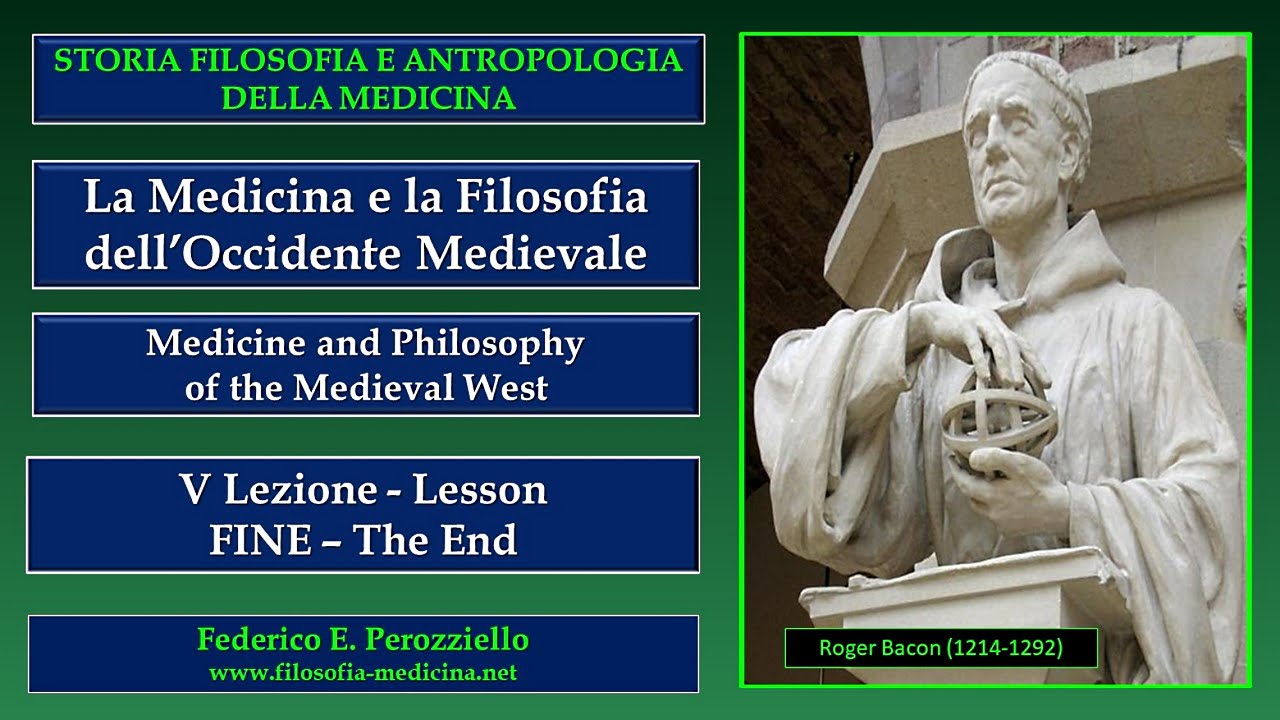
Al di là del Canale della Manica, in Inghilterra, alcuni filosofi riuscirono ad affrancarsi per un lungo periodo dalle imposizioni ecclesiastiche. Furono il fondatore della Scuola di Oxford, Roberto Grossatesta, il suo allievo Roger Bacon (Ruggero Bacone) e il più originale e innovativo di tutti, il filosofo francescano Guglielmo di Ockham.
L’Epidemia di Peste del 1347-1353 avrebbe interrotto questo sviluppo intellettuale facendo prendere alla ricerca della conoscenza scientifica e di quella umana delle strade diverse. Questa lezione è il racconto di quello che accadde in quegli anni.
HISTORY, PHILOSOPHY AND ANTHROPOLOGY OF MEDICINE
by Federico E. Perozziello
V Lesson
Medicine and Philosophy in the Medieval West
Around the year 1250, the City of Paris was the cultural capital of the Western World. In its University, under the watchful eye of the Bishop and the Curia, the most brilliant intellectuals of the time taught. A certain freedom of discussion and argumentation was allowed, which the professors often tended to abuse. The ideas of Averroes and Aristotle had provoked an unstoppable intellectual ferment that ended up going beyond the boundaries of theological legality. In 1277, the bishop of Paris, Stephen Tempier, issued a decree condemning the theses of the Averroists, identifying 219 arguments that could no longer be taught as 'True'.
Across the English Channel, in England, some philosophers succeeded in freeing themselves for a long period from ecclesiastical impositions. They were the founder of the Oxford School, Robert Grossatesta, his pupil Roger Bacon and the most original and innovative of them all, the Franciscan philosopher William of Ockham.
The Plague Epidemic of 1347-1353 would interrupt this intellectual development and take the quest for scientific and human knowledge in different directions. This lecture is an account of what happened in those years.
Повторяем попытку...
Доступные форматы для скачивания:
Скачать видео
-
Информация по загрузке: