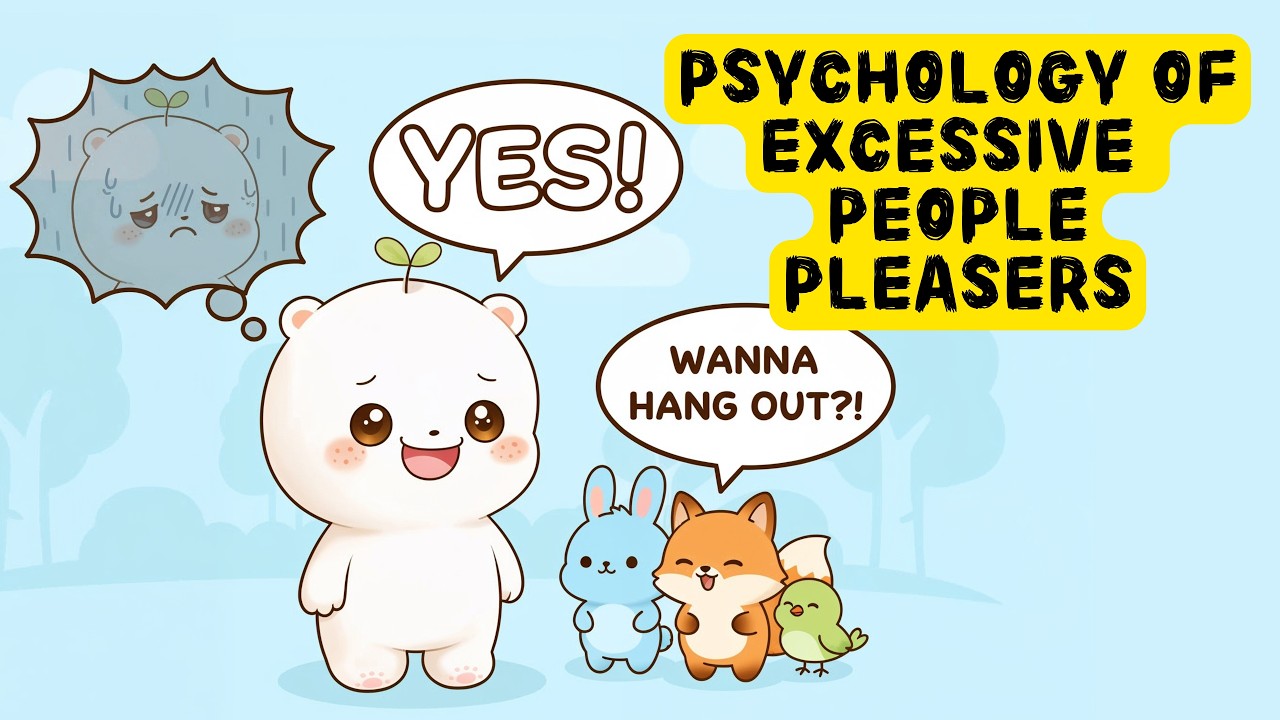
Psychology of Excessive People Pleasers
Автор: Mochi Mind
Загружено: 2026-02-22
Просмотров: 3
Описание:
The psychology of people pleasers reveals that excessive people pleasing isn't a personality quirk — it's a nervous system response trained to treat approval as survival and disappointment as danger. This video breaks down where people pleasing behavior actually comes from, what it's protecting you from, and why the fear of saying no runs so much deeper than just difficulty setting boundaries. It starts with childhood conditioning approval patterns, where a developing brain learned that love was conditional, that managing other people's emotions was your job, and that being helpful earned safety in an unpredictable environment. That program never updated, which is why your adult body still responds to social disapproval like a genuine emergency — the tightness, the racing thoughts, the compulsive replay of conversations scanning for where you failed. The cost of approval seeking compounds silently: resentment and burnout from every automatic yes, self abandonment disguised as generosity, feeling unseen in relationships you built by making your own needs invisible. This video walks through why stopping feels so threatening, how conflict avoidance reinforces the pattern it's trying to escape, and what healthy boundaries actually look like in practice — not coldness, but clarity that serves everyone. There's a critical distinction between chosen generosity vs obligation, because your yes only means something when your no exists, and people pleasing and guilt keep you trapped in a cycle where the approval you chase never fills the hole it promises to fill. Whether you're navigating people pleasing in friendships, people pleasing at work, or wondering how to be honest without being mean, this video explains the path from people pleasing recovery to saying no without guilt — starting with the recognition that people pleasing and identity are deeply fused, and rediscovering who you actually are underneath years of accommodation is its own form of practice.
▬▬▬▬▬▬▬▬▬▬▬▬▬▬▬▬▬▬▬▬▬▬▬▬▬▬▬▬▬▬▬▬▬▬▬▬▬▬▬▬▬▬▬▬▬
Topics covered in this video:
👉 Why people-pleasing isn't kindness — it's fear wearing the costume of kindness
👉 Childhood origins: how conditional love trains a nervous system to prioritize everyone else
👉 The fawn response and why your "yes" happens before any conscious choice
👉 The hidden costs: resentment, burnout, and training people to treat your boundaries as optional
👉 Why you can be surrounded by relationships and still feel completely unknown
👉 Why saying no feels like risking abandonment — and what's actually driving the fear
👉 How avoidance prevents your brain from updating outdated survival software
👉 What healthy boundaries look like in practice without becoming cold or selfish
👉 The grief of transition: which relationships survive your honesty and which ones don't
👉 Rediscovering identity after years of molding yourself to others' expectations
▬▬▬▬▬▬▬▬▬▬▬▬▬▬▬▬▬▬▬▬▬▬▬▬▬▬▬▬▬▬▬▬▬▬▬▬▬▬▬▬▬▬▬▬▬
This video is for anyone who says yes automatically and then feels the familiar weight of agreeing to something that will cost them energy they don't have — whether that shows up as people pleasing in friendships, people pleasing at work, or the quiet erosion of not knowing what you actually want because you've spent so long tracking what others want instead. This isn't a video telling you to stop being generous. It's a video explaining why I say yes automatically so you can start choosing your generosity instead of being driven by it. Watch until the end for the identity recovery piece that explains why boundary setting in relationships starts with rediscovering a self that got buried under layers of accommodation.
▬▬▬▬▬▬▬▬▬▬▬▬▬▬▬▬▬▬▬▬▬▬▬▬▬▬▬▬▬▬▬▬▬▬▬▬▬▬▬▬▬▬▬▬▬
Primary Sources & References:
Assor, A., Roth, G., & Deci, E. L. (2004). "The Emotional Costs of Parents' Conditional Regard: A Self-Determination Theory Analysis." Journal of Personality, 72(1), 47–88.
Walker, P. (2013). "Complex PTSD: From Surviving to Thriving." Azure Coyote Publishing.
Bowlby, J. (1969). "Attachment and Loss: Vol. 1. Attachment." Basic Books.
Palamarchuk, I. S., & Vaillancourt, T. (2021). "Mental Resilience and Coping with Stress: A Comprehensive, Multi-Level Model of Cognitive Processing, Decision Making, and Behavior." Frontiers in Behavioral Neuroscience, 15, 719674.
Harter, S. (2012). "The Construction of the Self: Developmental and Sociocultural Foundations." Guilford Press.
▬▬▬▬▬▬▬▬▬▬▬▬▬▬▬▬▬▬▬▬▬▬▬▬▬▬▬▬▬▬▬▬▬▬▬▬▬▬▬▬▬▬▬▬▬
Disclaimer: This channel is for educational and informational purposes only. It is not intended to replace professional psychological, medical, or therapeutic advice.
#peoplepleaser #boundaries #psychology
Повторяем попытку...
Доступные форматы для скачивания:
Скачать видео
-
Информация по загрузке: