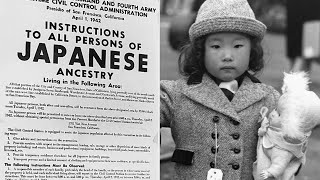
How did the Japanese community in the United States set a precedent for reparations? | KQED News
Автор: KQED News
Загружено: 2023-05-31
Просмотров: 7211
Описание:
As the discussion on reparations for Black Californians heats up, we explore the journey of the Japanese people who experienced incarceration during World War II. Through historical archives and testimonials provided by descendants of victims, we paint the scene of this tragic imprisonment and dehumanization of tens of thousands of Japanese who resided in the United States. To help understand what the Japanese Americans endured, we share the experiences of those who survived incarceration, and how it rippled through generations. We also learn how the civil rights movement led by Black leaders inspired the Japanese American community to lobby for reparations.
Funded by the California Civil Liberties Program.
📖 Chapters:
00:00 - 00:53 Spoken word by Kim Miyoshi originally delivered at Tsuru Rising Bay Area Vigil.
00:54 - 01:09 Learn about Japanese American history and how to address reparations today?
01:10 - 2:27 Misconceptions of what it means to be an American. Why didn't my grandparents speak English, though they lived in Los Angeles for 70 years?
2:28 - 3:19 How did the bombing of Pearl Harbor impact people of Japanese ancestry in the United States?
3:20 - 4:50 Where were Japanese people incarcerated in the United States during World War II, which the government called “Internment camps” at the time of the incarceration.
4:51 - 5:37 Why did no one talk about the incarceration of Japanese Americans, once World War II has ended?
5:38 - 6:29 How did the civil rights movement inspire the Japanese communities in the United States to start fighting for redress and reparations?
6:30 - 6:46 (PLEASE TAKE NOTE) There were three organizations who fought for redress for the Japanese communities. They were The Nikkei for Civil Rights and Redress (NCRR), The National Coalition for Japanese American Redress (NCJAR) and the Japanese American Citizen’s League (JACL). It is important to point out that each of these organizations approached the fight for redress differently.
Though we feature an interview with John Tateishi in this video, who is the former National Redress Director for JACL, we invite you to learn about how each group approached redress through the links below.
LEARN MORE BELOW👇
Nikkei for Civil Rights and Redress (NCRR) - https://ncrr-la.org/
National Council for Japanese American Redress (NCJAR) - https://encyclopedia.densho.org/Natio...
Japanese American Citizen League (JACL) - https://jacl.org/
7:01 - 7:12 (PLEASE TAKE NOTE) The archival photos featured in this section were provided by NCRR and showcase their efforts for the fight for redress.
7:13 - 8:23 How the fight for redress within the Japanese American community resulted in investigative hearings across the United States.
8:24 - 9:06 The Civil Liberties Act of 1988.
9:07 - 9:39 How are Japanese Americans using their history and experience to help support the current fight for reparations in the Black community today?
9:40 - 10:00 Can we afford not to address the harms from our past?
10:01 - 11:52 Representative Ron Dellums speaks to Congress about his experience growing up in Oakland and witnessing his friend being taken away for incarceration during World War II.
Learn more at www.kqed.org/reparations and here 👇
Archival Resources:
National Archives
California State Library
Newspapers.com
The Internet Archive
U.S. Office of War Information
Library of Congress
Hearing before the Commission on Wartime Relocation and Internment of Civilians (Chicago), September 22-23, 1981 clip courtesy of Northeastern Illinois University
Ronald Reagan Presidential Library
Japanese American National Museum (Gift of Yoji Matsushima, 92.200.6)
Japanese American National Museum (Gift of the Sasaki Family, 96.150.11)
Visual Communications Photographic Archive
Nikkei for Civil Rights & Redress Archives Collection
Japanese American Families for Justice
Roy Nakano
Beth LaBerge
Ellen Sasaki Maseba
George Wakaji
KQED Archives
KQED NewsImage
Special thank you to the @AsianArtMuseum
#japaneseredress #japaneseamericanhistory #japaneseinternment #worldwar2
Повторяем попытку...

Доступные форматы для скачивания:
Скачать видео
-
Информация по загрузке: